MISE.004 · A FLOOR · UNBUILT
Calling
Card
a department store floor that gets ready when your AI sends word ahead.
The problem
“Shoppers don’t need to come into a department store to fulfill their needs.”
Stacey Widlitz, SW Retail Advisors, in Fortune, March 2026
Department stores took about 14 per cent of US retail sales in 1993 and 2.6 per cent in 2024 (Fortune). Saks Global filed for bankruptcy in January 2026 and came out in June with 49 stores (AP), and Neiman Marcus closed its downtown Dallas flagship, on its corner since 1914, on 30 September (WWD). AI assistants now shop for people (TechCrunch), and a shop floor is hard for them to read: Google’s AI phones stores to ask what they have in stock, and for now it skips most clothing (Google).
- What it is
- Our proposal for one floor of a department store. Your AI sends a card ahead with your shortlist and sizes, and you arrive to one room with all of it in, a named host who has read the card, and the lantern over your room’s district lit.
- Why a brand would want it
- The visit would end in a sale, because the shortlist is right and a person is waiting. Fewer trips would be wasted on pieces that aren’t there, and the sale would be counted to the floor that got it ready.
- Where it stands
- Unbuilt. Our own idea, with no client. Nothing here has been built or measured yet.
MISE 店 is our design research: unbuilt proposals for stores, made the way we’d make one for you.
1 · The floor we’d build
We’d open one floor to the AI a shopper sends ahead, and get it ready for the person who follows, in six moves.
- 1The floor publishes its stock by size, across every brand.
- 2Your AI reads it and sends a card ahead with your shortlist.
- 3You confirm by text. The card is for that visit only.
- 4At your yes the pieces are held, and a runner pulls them into one room, in your sizes.
- 5A host, named on your confirmation, has read the card.
- 6Six districts, each under a lantern. Yours is lit.
- A card
- It holds only what you chose to share: a first name, a number for the text, a time, the occasion, your sizes and the shortlist. It is kept for that visit, then deleted, unless you say keep it.
- A lantern
- A paper lantern hangs at the edge of every district, over the street. When your room is ready, the lantern over its district is lit, so at the door the lantern takes over from your phone.
- A person
- The floor’s page lists the roles on duty, not who is standing where. Your host’s first name goes only on your confirmation, and only with their yes.
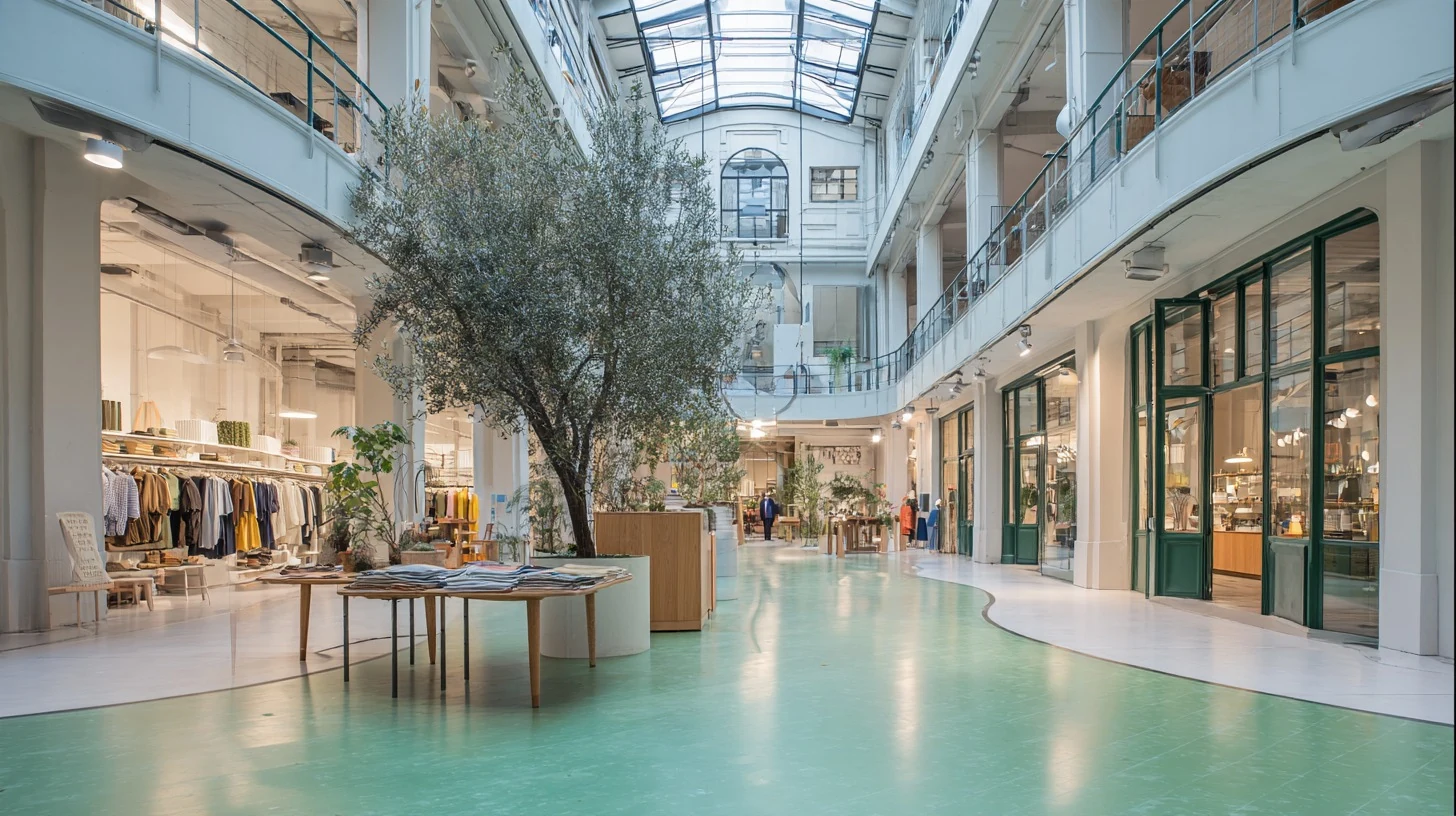
Study image
2 · The calling card
A caller once left a card at the door before a visit, so the house could be ready. Your AI can do the same: it reads what the floor publishes, then sends a card ahead with only what you chose to share, and you confirm it yourself.
Swipe sideways for the whole drawing
What your AI reads
- In stock
- Every piece on the floor, by size, across every brand, as it sells
- Rooms free
- A at 11:00 · B at 14:30 · D at 11:00 · F at 16:00
- On duty
- Two hosts, a runner and a tailor. Roles, not names.
- Districts
- Six, each under its own lantern
The calling card it sends ahead
- 1Unlined jacket, sand
- 2Pleated trousers, stone
- 3White poplin shirt
- 4Knitted silk tie, navy
- 5Suede loafers, brown
- 6Woven leather belt
Left off the card
Your surnameYour addressYour measurementsWhat you bought elsewhereAnything you didn’t choose to share
The floor’s page lists roles on duty, never who is standing where.
Fig. 1. The calling card your AI sends ahead, with only what the floor needs to get ready. Your AI reads the floor’s own page first, and anything you didn’t choose to share stays off the card.
On the card
- AA first name, so your host can greet you
- BA time, so the room is ready and the lantern lit when you arrive
- CWhat you’re coming for, so your host can add what the list missed
- DYour sizes, and nothing else about your body
- EThe shortlist: pieces your AI found in stock, from any brand on the floor
- FYour yes, by text: you confirm the visit, not your AI
- GKept for that visit, then deleted, unless you say keep it
Left off
- Anything you didn’t choose to share stays with you
3 · The floor, ready
The ground floor, 240 by 140 feet. Six districts around a skylit courtyard and its tree, a lantern over each, and a room in the four that sell clothes, shoes and bags. When a card comes in, a runner pulls the shortlist into the room nearest most of it, and the lantern over that district is lit for your arrival.
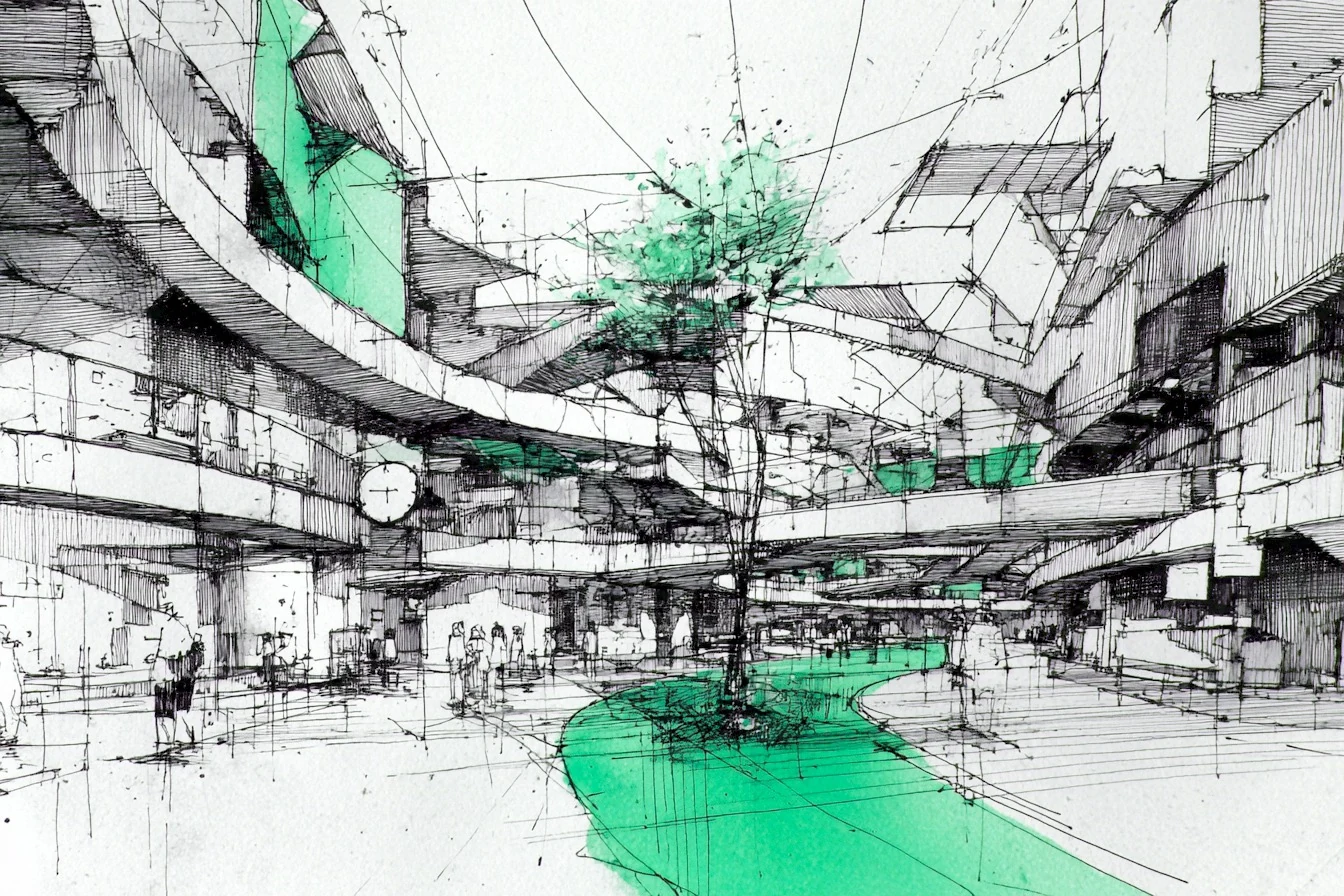
Swipe sideways for the whole drawing
Fig. 2. The floor, ready for one card. A runner has pulled the six pieces from four districts into room A, its lantern is lit, and your host waits beside it. The way in from the door is in green.
Districts
- ACoats and tailoring
- BShirts and knitwear
- CThe café and garden
- DShoes
- EObjects and home
- FBags and accessories
Marks
- Your way in, from the door to the lit lantern
- The street
- The runner’s pulls, from four districts
- The six pieces on your card
- A room; yours, ready, in green
- A lantern over each district; lit, in green
- Your host
- A landmark: the tree, the stair
- Walls, cut
Inks
- Clothes: coats, tailoring, shirts and knitwear
- Shoes and bags
- Food and home: the café, objects
The floor, in figures
- Size
- 240 by 140 ft, the ground floor
- Districts
- Six, in three inks
- Lanterns
- Six, one over each district
- Rooms
- Four, where there are clothes, shoes and bags to try
- Each card
- A room, a runner and a named host
- Columns
- On a 30 by 28 ft grid

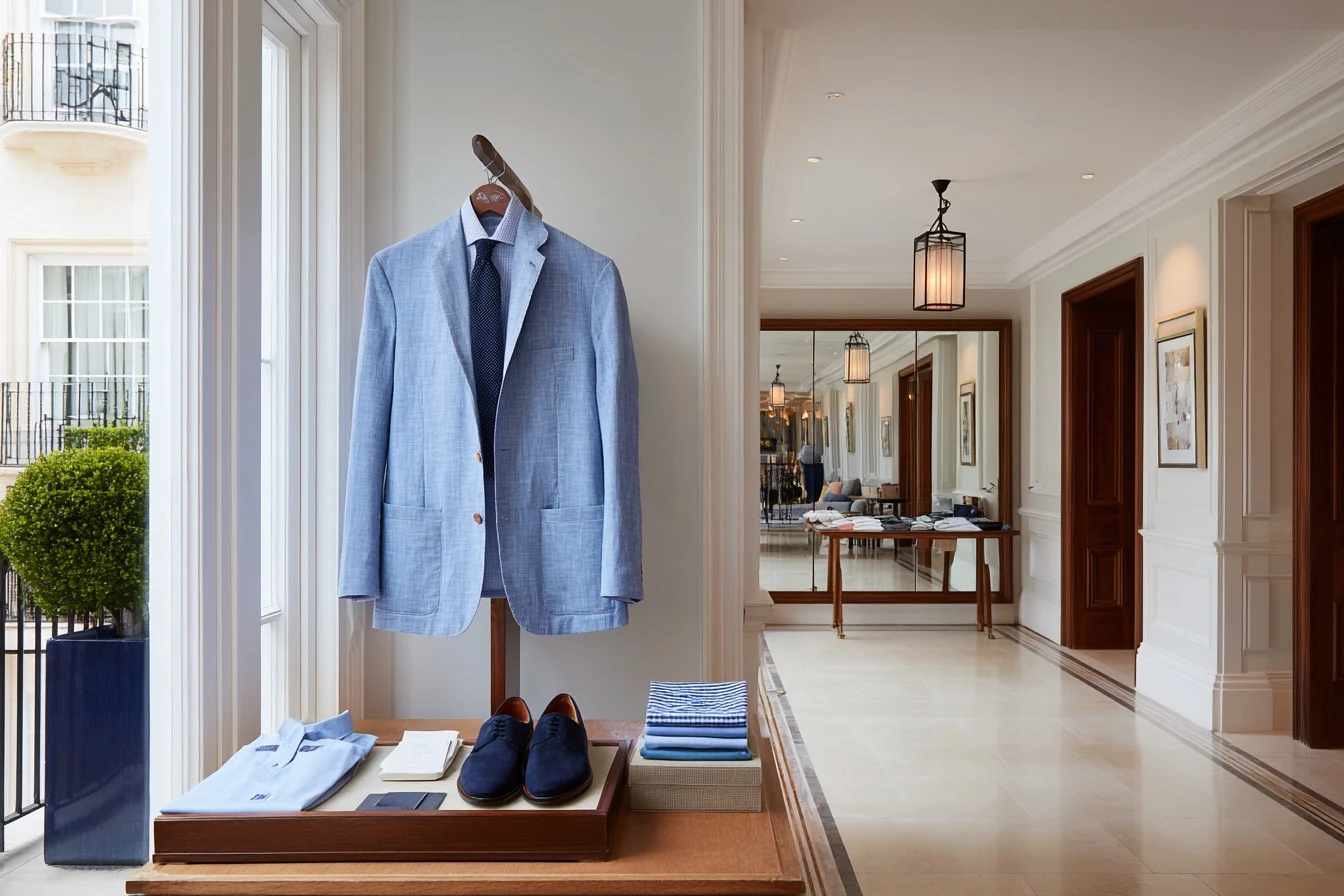
Study images
4 · One visit
From the evening before to the room. The card passes from your AI to you, to the people on the floor, and back to you at the door. We design the whole of it as one visit.
Swipe sideways for the whole drawing
Fig. 3. One visit on one line. It crosses from your AI to you, to the people on the floor and back to you, and each crossing is a hand‑off we’d design with the rest.
- 1The evening before, your AI reads the floor’s page: your sizes in stock across four brands, and room A free at 11:00.
- 2It sends the card ahead: the shortlist, your sizes, the occasion and a time.
- 3A text asks you, not your AI, to confirm. You say yes.
- 4In the morning a runner pulls the six pieces from four districts into room A.
- 5Your host reads the card, and adds the jacket in a second size.
- 6Five minutes before you arrive, the lantern over Coats and tailoring is lit.
- 7At the door the lantern takes over from your phone, and you walk straight to it.
- 8Your host meets you at the room. Everything on the card is there, in your sizes.
- 9The card is deleted, unless you said keep it, and the sale is counted to the floor that got it ready.
5 · Why it should work
A shopper who arrives with a shortlist, to a room that has it in their sizes and a person who has read the card, starts at the fitting, not the hunt. The floor has to be easy to find your way round too. Kevin Lynch asked people in Boston, Jersey City and Los Angeles to draw their city from memory. Those who knew Boston least thought of it in big regions and rough directions; those who knew it best steered by small landmarks. Districts you can name and a lantern lit over your room’s district give a first visit both.
“A good environmental image gives its possessor an important sense of emotional security.”
Kevin Lynch, The Image of the City, 1960, page 4
Swipe sideways for the whole drawing
- PrecedentThe personal shopping suiteDepartment stores have long kept suites where pieces in your size wait for you. You book them yourself, by phone or in the store’s own app.
- HistoryThe calling cardIn Victorian Britain a caller left a card at the house before a visit, and a hostess printed the days she was at home to callers. The custom faded after the First World War, as servants grew scarce.
- The mindThe map in the headLynch asked people to sketch their city from memory; they drew paths, edges, districts, nodes and landmarks (1960). In a virtual model of a mall, the people who found the shops more easily drew better maps of it afterwards (Vater and others, 2025).
- MetaphorThe stage, setIn theatre the stage is set before anyone walks on. Brenda Laurel described the computer as a stage shared by agents, both human and computer (1991).
The idea
Send your AI ahead, and the floor has your shortlist waiting in one room.
A card sent ahead, a room with your sizes in it, a person who has read the card, and a lit lantern to find it by.
Fig. 4. Where the idea comes from: the personal shopping suite, the old calling card, the map in the head, and a stage set before anyone walks on. Each gets a place ready for someone on their way.
| What the research shows | What it means | Our principle | The rule | In CALLING CARD |
|---|---|---|---|---|
| After a retailer let online shoppers see what its stores had in stock and collect it there, store sales and visits rose, and online sales fell (Gallino and Moreno, 2014). | Shoppers go where they can see the stock. | Publish the floor where an AI can read it. | Stock by size across every brand, rooms free today, roles on duty. | The floor’s own page and feed, on the open web. |
| Three in four US adults said they would trust AI shopping agents less if brand money swayed them (The Harris Poll for Quad, 2026). | The shortlist has to stay the shopper’s. | Publish what is true, and let the AI choose. | Stock on the page, not promotions; on the card, only what the shopper shares. | The card, confirmed by you and deleted after the visit. |
| Lynch found that people who knew a city least saw it in big regions, and those who knew it best steered by small landmarks (1960). | A first visit needs districts; a landmark gets you the rest of the way. | At the door, hand the way from the phone to the room. | Six districts, a lantern over each, yours lit. | The lit lantern over your room’s district. |
| Brenda Laurel described the computer as a stage shared by agents, human and computer (1991). | The AI and the people on the floor share one stage. | Let the AI set the room, and people run the visit. | Every card gets a room, a runner and a named host. | Your host, who has read the card, at the room. |
6 · How we’d prove it
Nothing here has been built or measured. If a store wanted it, we’d find out if it works in three weeks, on real people, before anyone builds.
- Week one: a floor an AI can read
- We’d count one floor’s stock by its tags and publish it by size through the feeds search engines already read, and put up a plain page any AI can fill in (what you’re coming for, your sizes, a time) with a text number. We’d name a runner and a host for every booking.
- Week two: fifty cards
- We’d ask fifty of your customers to send their own AI to book. Each booking is confirmed with the person by text, and each gets a room with the shortlist in it and a host who has read the card.
- Week three: count
- Before we start, we’d agree with you what has to be true: how the readied rooms sell against walk-ins, the size of the basket, and how much of each list was in stock. Then we’d tell you if it is worth building.
Want it in your store? We’d start with the same three weeks, on your floor, with your customers. Like the Roadmap, it ends in a decision.
Contact