MISE.002 · A LABEL · UNBUILT
Garment
Passport
a service book in every label, and a service bay in every store.
The problem
“As the resale market continues to grow, fashion brands are no longer content to watch the second sale happen somewhere else.”
Tatiana Sataua, in Fortune, August 2026
A brand sells a coat once, then loses it: every repair, alteration and later owner happens out of sight, and marketplaces took 88 per cent of US resale spending in 2024 (BoF and McKinsey, The State of Fashion 2026). In October 2026 Patagonia brought its resale fully in‑house, selling used next to new on its own site (Patagonia). Trade-in still grades a piece on its condition, not its history. And from April 2028 every EU country must hold brands responsible for the clothes they sell after use, and the rules will favour pieces that last (European Commission).
- What it is
- Our proposal for a service book in every care label and a service bay in every store. A tailor on the floor signs every service and repair into the book, the bay calls when a piece is due, and a full book holds up what the piece is worth at trade‑in.
- Why a brand would want it
- Owners would come back to your store for service, the way a car goes back to its dealer, and the second sale would stay with you.
- Where it stands
- Unbuilt. Our own idea, with no client. Nothing here has been built or measured yet.
MISE 店 is our design research: unbuilt proposals for stores, made the way we’d make one for you.
1 · The service we’d build
We’d give every piece a service book in its label and every store a service bay, in six moves.
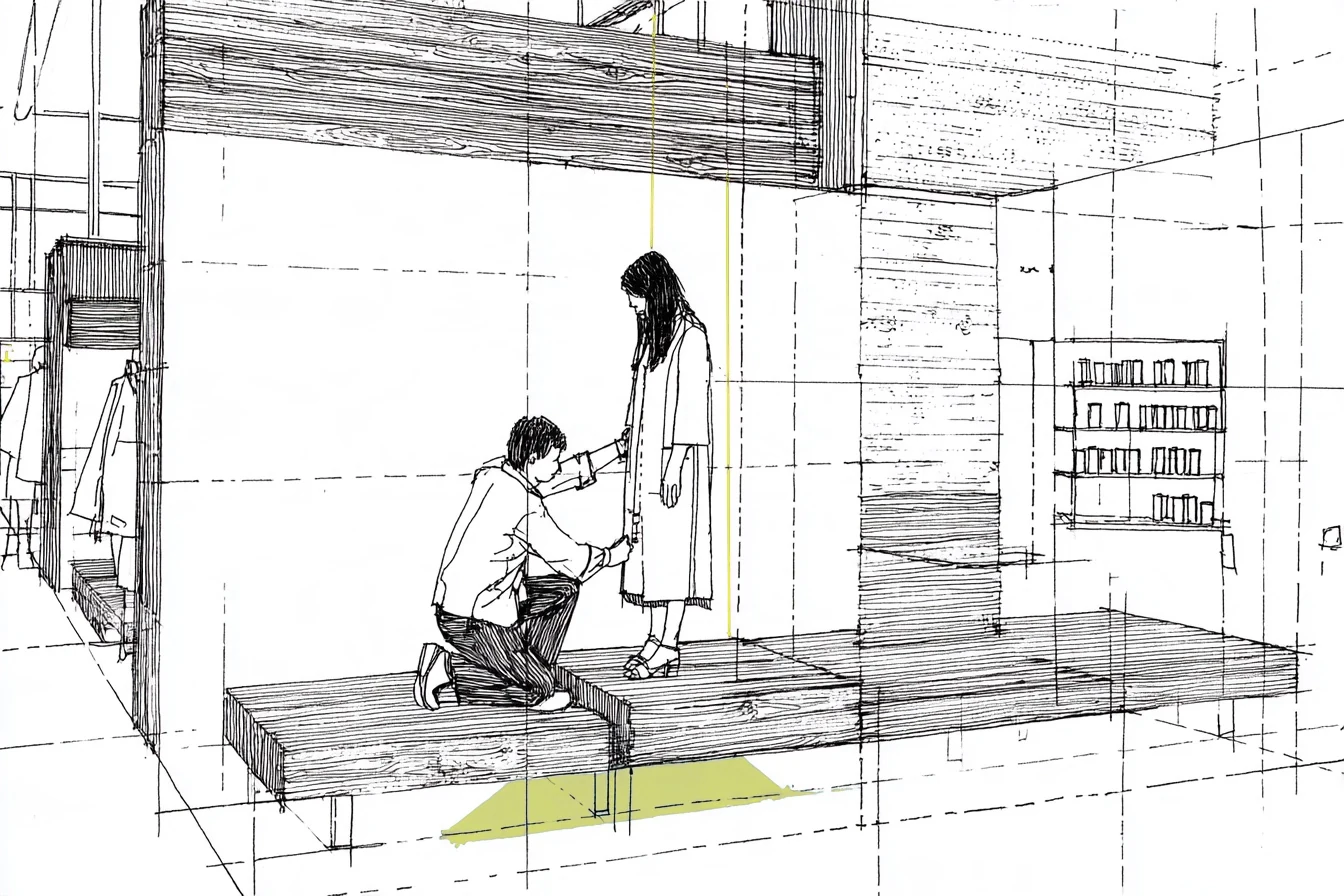
- 1A service bay on the shop floor, with a tailor at it.
- 2A service book in every care label: made, mended, altered, owned.
- 3The tailor signs every service and repair into the book.
- 4The bay calls when a piece is due: before winter, a hem, a resole.
- 5At trade‑in, a full book holds up what the piece is worth.
- 6Traded pieces go back on the rail with their book, and sell again.
- A stitch
- Each tailor ends every job with a few stitches in a thread colour of their own, inside the coat where they don’t show, registered with the brand. The colour matches the signed entry in the book, with no phone needed.
- A call
- The book tells the bay which pieces are due. Each August the bay calls the owners of coats due for their winter clean. Owners choose at the till whether they want the call.
- A hang tag
- The hang tag shows the credit the brand would give for the piece at trade‑in three years on, for a coat in good condition with its book kept. The brand sets it each season.
2 · The service bay
A tailor would work on the shop floor at a service bay, where people bring pieces to be cleaned, mended, altered or traded in. The tailor signs each job into the piece’s book. The tag in the label only saves writing it out twice.
Swipe sideways for the whole drawing
Fig. 1. Who uses the book: the tailor writes it, and four more people read the same label, each for what their job needs.
People
- AThe tailor: signs every service and repair, and sees the spare cloth left.
- BThe bay: what each piece is due for, and whom to call before winter.
- CThe owner: care, the next service, and the credit at trade‑in.
- DThe next owner: every signed entry, before they buy.
- EThe recycler: fibre, weight, and where to send it.
3 · One coat, five years
Made, sold, serviced, repaired, traded in and sold again. Each time the coat came back to the bay, the tailor would sign its book, and at trade‑in the book would hold up what the coat is worth. The next owner gets the book with the coat.
Swipe sideways for the whole drawing
Fig. 2. One coat, five years: its service book from the workshop to a second owner. Each signed service holds up the trade‑in credit printed on its hang tag; with no record, the coat would be graded on condition alone. Drawn as the idea, not data.
The service book
- 103.2026 Porto: cut and sewn by a family workshop. The book opens.
- 210.2026 New York: sold, with the book in its label and a trade‑in credit on its hang tag.
- 308.2027 The call: the bay tells owner one the coat is due for its winter clean.
- 410.2027 First service: cleaned by the brand’s cleaner, then pressed, checked and signed at the bay by the store’s tailor.
- 510.2028 Repair, after the next call: cleaned again, cuffs rebound and an elbow darned, signed.
- 610.2029 Traded in by owner one. The full book holds up the credit on its tag.
- 701.2030 Sold again in the store to owner two, with its book and a new hang tag.
- 810.2030 Owner two’s first service, after the same call, signed into the same book.
Owners and values
- AOwner one, New York.
- BOwner two, New York.
- CThe trade‑in credit on the hang tag, held up by a post from every signed entry.
- DThe same coat with no record, graded on condition alone.
Marks
- A signed entry: a service or repair, signed by the tailor who did it.
- The bay’s call, two months before a piece is due.
- The hang tag, with the credit printed on it.
- A heavy mark: where the book begins.
4 · The money
A car can go back to its dealer for service for as long as it runs. A coat could go back to its brand the same way.
17%
Of revenue
48%
Of gross profit
Parts and service at AutoNation, a US car dealer group, in 2025 (AutoNation, Form 10‑K for 2025).
- Service
- Cleaning, pressing, a new hem, a resole. The bay would bring each owner back to the store every season, past the new stock.
- Repairs
- Mending that happens out of sight today would come back to the brand, and every repair in the book holds up what the piece is worth at trade‑in.
- Resale
- Traded pieces come back as stock and sell again on the rail with their book, so the second sale, and the next owner, stay with the brand.
When the money shows up
- Service
- From the first winter after the sale.
- The first sale
- From day one, if the credit on the hang tag moves people to the better coat.
- Trade‑in stock
- From year three.
- The promise
- The credit is a promise the brand carries on its books from day one.
5 · The label
The book opens from the coat, not from an app, so the record goes wherever the coat goes. The care label looks like any other, with a tag sewn inside that most phones open with a tap: the tailor signs from it, the owner books the next service from it, and the next owner reads it before buying.
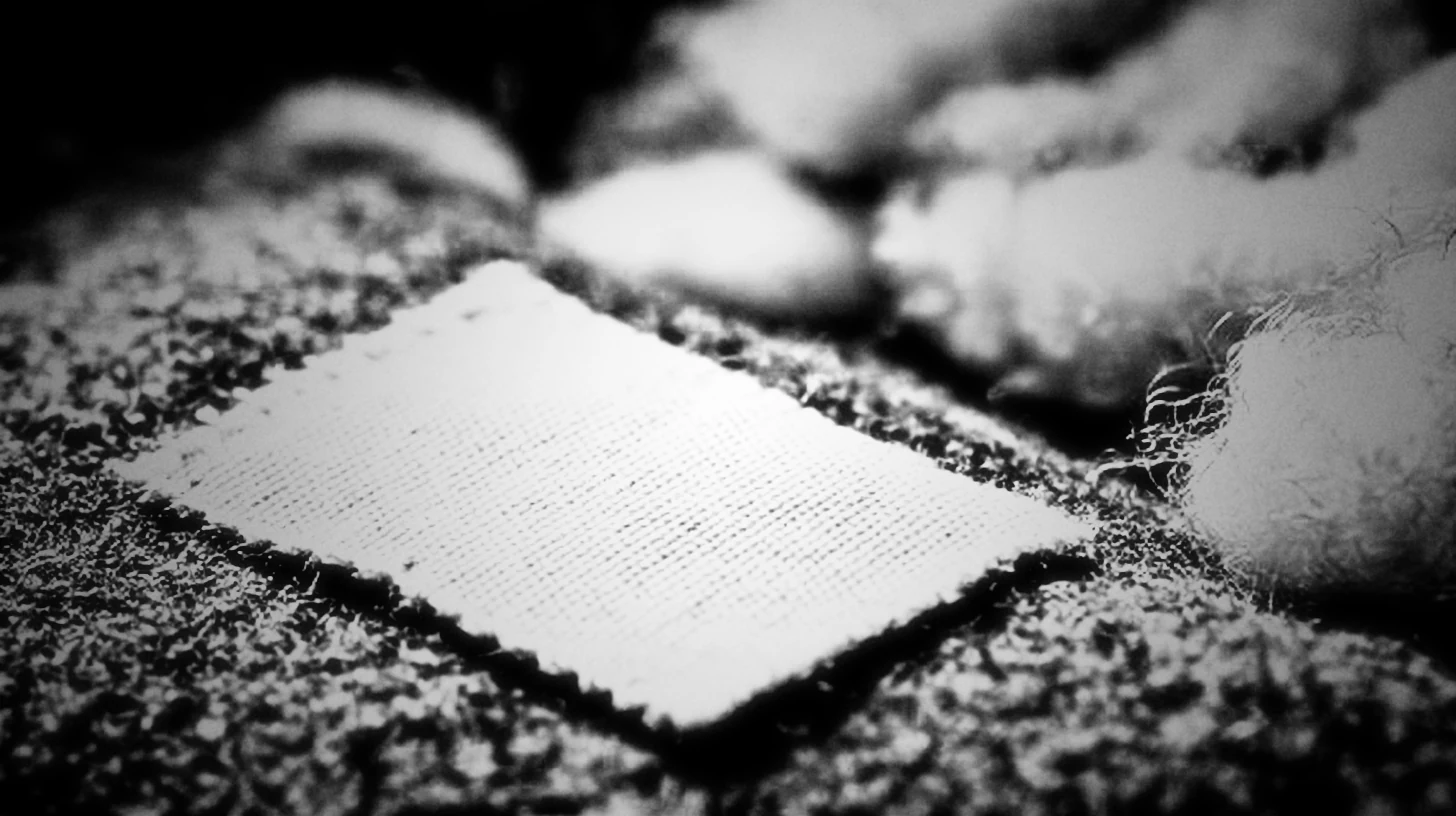
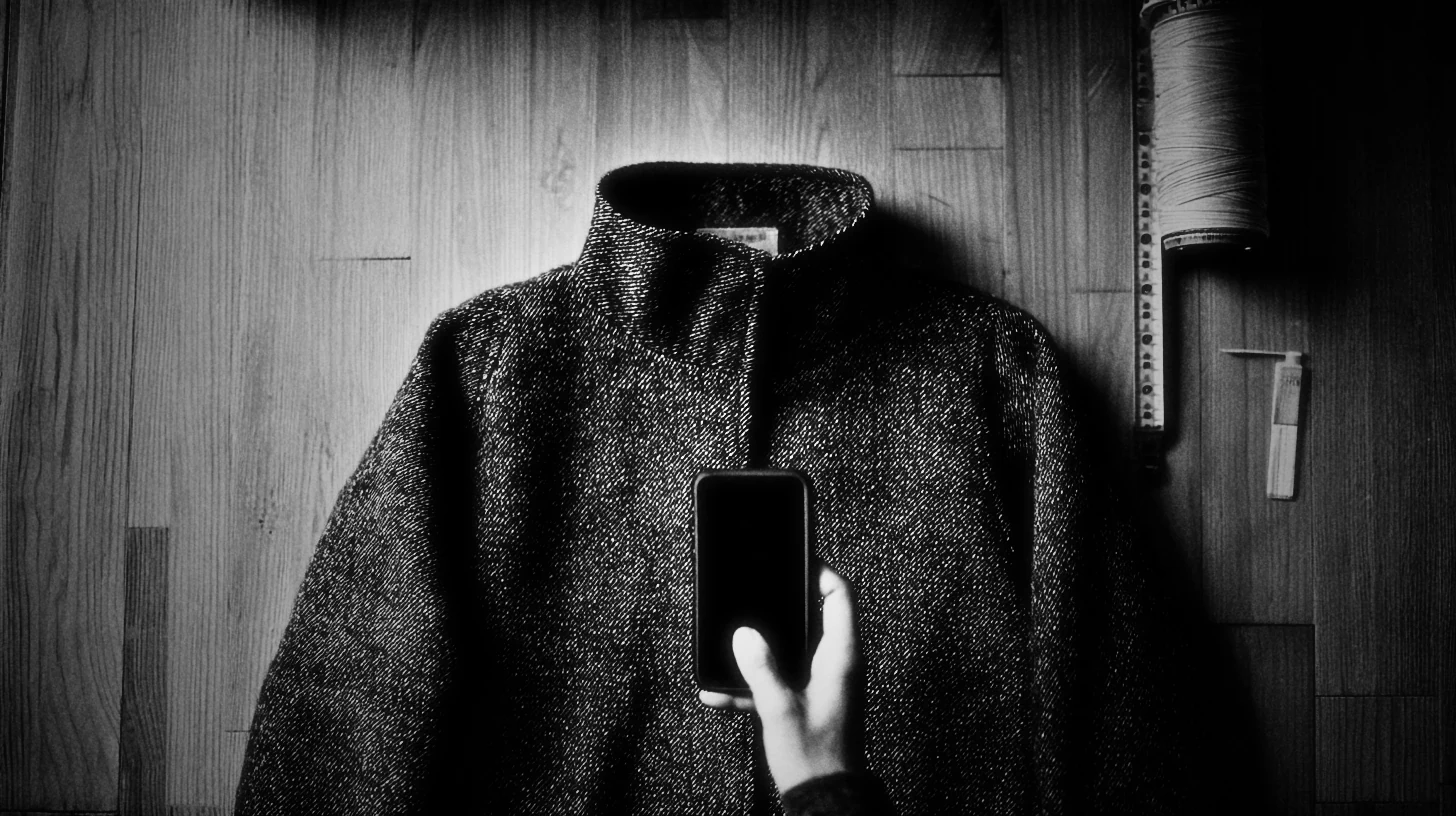
Study images: the label, and a tap at the bay
Fig. 3. The label, drawn enlarged: its woven face, and its three layers drawn apart.
Layers
- AThe woven face: size, fibre, origin, care, and the tap mark.
- BThe NFC tag: a coil antenna and a chip, sealed against cleaning.
- CThe backing, and one line of stitching into the seam.
Views
- aThe woven face, from the front.
- bThe three layers, drawn apart.
The label, in figures
- Size
- 30 × 70 mm
- Layers
- Three: the face, the tag, the backing
- Tag
- NFC, opened by most phones with a tap
- The tag
- NFC, sewn inside the label. Most phones open it with a tap, no app. Each tap makes a fresh code, so a copied link can’t pass a fake at the bay.
- The book
- One record that the brand and its tailors add to, with a copy held by an outside party, so the book outlives the brand. Owners appear as owners, never by name.
- The signature
- Only a tailor the brand has approved can sign an entry, and the brand checks a share of their work each season.
Fig. 4. What a tap opens: six screens in the order an owner would need them, on a web page with nothing to install. Most lead back to the bay and its tailor.
Screens
- 1Hello.
- 2Care.
- 3Its book.
- 4Next service.
- 5Trade it in.
- 6Sold again.
6 · Why it should work
A car’s service book shows the next owner how it was looked after. A coat has no book, so trade‑in grades it on condition alone. Shoppers also rate a product lower when they think another shopper has touched it (Argo and others, 2006). On this book the owners stay strangers, so the name a buyer can trust is the tailor’s, signed on every entry, as a maker’s mark is on silver.
“An ordinance of Edward III established the maker’s mark, which was now required alongside the leopard’s head and identified the goldsmith responsible for making a piece of plate.”
Assay Office London, History of Hallmarking, on 1363
Swipe sideways for the whole drawing
- PrecedentThe cutter’s ledgerA Savile Row house kept order ledgers from 1846 to the 1950s, and still cuts its seams with spare cloth so a suit can be let out.
- HistoryThe hallmark, 1300 to 1544Four marks answer four questions: who made it, what it is, who tested it, and when. The maker’s mark and the date letter point to the goldsmith and the warden who answer for the piece.
- The mindTouched by whomShoppers rate a product lower when they think another shopper has touched it (Argo and others, 2006). Things a known, admired person touched are worth more (Newman and others, 2011).
- MetaphorThe car’s service bookA car’s service book is stamped at every service and goes to the next owner with the keys.
The idea
A service book in every label.
The tailor signs every entry, the bay calls when a piece is due, and a full book holds up what the piece is worth at trade‑in.
Fig. 5. Where the idea comes from: a tailor’s ledger, the silversmith’s hallmark, what shoppers feel about things a stranger touched, and a car’s service book. Each is about whose hands a thing has passed through.
| What the research shows | What it means | Our principle | The rule | In GARMENT PASSPORT |
|---|---|---|---|---|
| Marketplaces took 88 per cent of US resale spending in 2024 (BoF and McKinsey, 2026). | Most second sales happen away from the brand. | Bring the second sale back to the brand. | Trade‑in at the bay, and resale on the rail. | A rail of pieces sold again with their book. |
| At AutoNation, a US car dealer group, parts and service were 17 per cent of revenue and 48 per cent of gross profit in 2025 (Form 10‑K). | Service and parts bring in almost half the dealer’s gross profit. | Keep the owner coming back after the sale. | A bay on the floor, and a call when a piece is due. | The call before winter, and the tailor at the bay. |
| A Savile Row house kept order ledgers from 1846 to the 1950s. | A tailor’s book already holds the record, but only the tailor can read it. | Let the tailor keep the book, where the owner and the next owner can read it. | Every service, repair and alteration is signed, with the spare cloth left. | “Inlay remaining 2.0 cm”, in the tailor’s entry. |
| Shoppers rate a product lower when they think another shopper has touched it (Argo and others, 2006). | A used piece needs a name behind it. | Put the tailor’s name on every entry. | Approved tailors sign each job, and the brand checks their work. | A thread colour for each tailor, matched to the signed entry. |
| The EU is writing the rules for a digital product passport for clothing; the textile rules are expected in 2027 (Ecodesign working plan, 2025). | Brands selling clothes in the EU will likely have to give each piece a digital record. | Make the record the law asks for the one the tailor uses. | One record: the EU data underneath, the service book on top. | One tag, in the care label. |
Who has tried parts of this
- A re‑wax, 1921
- Barbour has re‑waxed and repaired its jackets since 1921: over 97,000 of them in the last year (Barbour).
- Free repairs, 2007
- Nudie Jeans has repaired its jeans since 2007, free and for as long as you own them, in its own repair shops (Nudie Jeans).
- A buy‑back at checkout, 2022
- Responsible, a start‑up, built a way for brands to show shoppers, as they buy, the credit they could get back for a piece later, online and in stores (Just Style).
- A bag’s record, 2023
- Coachtopia bags carry a chip whose record is updated at each repair, trade‑in or recycling (Coach).
- A watch’s passport, 2023
- Since October 2023, every Panerai watch has come with a digital passport that logs repairs, servicing and changes of owner (Arianee).
7 · How we’d prove it
Nothing here has been built or measured. If a store wanted it, we’d find out if it works in three weeks, on real people, before anyone builds. The trade‑in itself takes years; the call, the bay and the hang tag can be tested now.
- Week one: the call
- We’d write to people who bought a coat from you last winter and said yes to hearing from you, to say it is due for its winter clean, and count how many book it in. You can run this one yourself tomorrow.
- Week two: the bay
- We’d put a tailor at a bay on the floor on set days, service the coats that come in, sew a tagged label into each, and sign the job into its book.
- Week three: the hang tag
- We’d print the trade‑in credit on the hang tags of one rail of coats and not another, and see which sells. Before we start, we’d agree with you what the bay, the rails and the tills have to show for this to be worth building. Then we’d tell you if it is.
Want it in your store? We’d start with the same three weeks, on your floor, with your customers. Like the Roadmap, it ends in a decision.
Contact