MISE.003 · A CAFÉ · UNBUILT
Second
Round
a café whose regulars order the first bottling before it is made.
The problem
“…a distributor won’t take you unless you have a consumer pool.”
John Fieldly, CEO of Celsius, in Fortune, July 2024
Drink brands reach a shelf before they know if anyone will buy a second time. Across five European markets, only 17 per cent of new packaged-goods launches combine strong trial with repeat buying (NIQ, 2026). A café is a shelf the brand owns, where the till counts every second round and the regulars can order a first run before it is made.
- What it is
- Our proposal for a café that launches packaged drinks. Every house drink is a numbered version, and the till counts who comes back for each one. When a version wins, the regulars order its first bottling from their phones, and their names go on the first label.
- Why a brand would want it
- The first run is ordered before it is made, so there is no dead stock. The brand meets a distributor and a co‑packer with the numbers: who came back for the drink, and who ordered the bottle before it was made.
- Where it stands
- Unbuilt. Our own idea, with no client. Nothing here has been built or measured yet.
MISE 店 is our design research: unbuilt proposals for stores, made the way we’d make one for you. Second Round grew out of Mokuba 木馬, our own coffee and record bar concept, set in Aspen.
1 · The café we’d build
We’d build a café first: coffee by day, alcohol‑free drinks at night, records at the back. Six moves join the phone, the till, the bar and the bottle into one line.
- 1Every house drink is a numbered version, on the menu and the cup.
- 2The usual is ordered ahead from the phone, and waits by the door.
- 3The bar is kept for tasting, with the bench in view behind it.
- 4Baristas ring each version on its own key, and the till counts who comes back.
- 5When a version wins, the regulars order its first bottling from their phones.
- 6The run is made to their orders, with their names on the first label.
- A cup
- Every cup goes out with its version written on it by the barista: “v2.1”. Regulars start to order by number.
- A text
- When a version wins, the regulars who came back for it get one text, with a link to order the first bottling. There is no app to download.
- A label
- The first run’s label lists the regulars who ordered it, by first name or initials, as each of them chooses. Every bottle is numbered within the run.
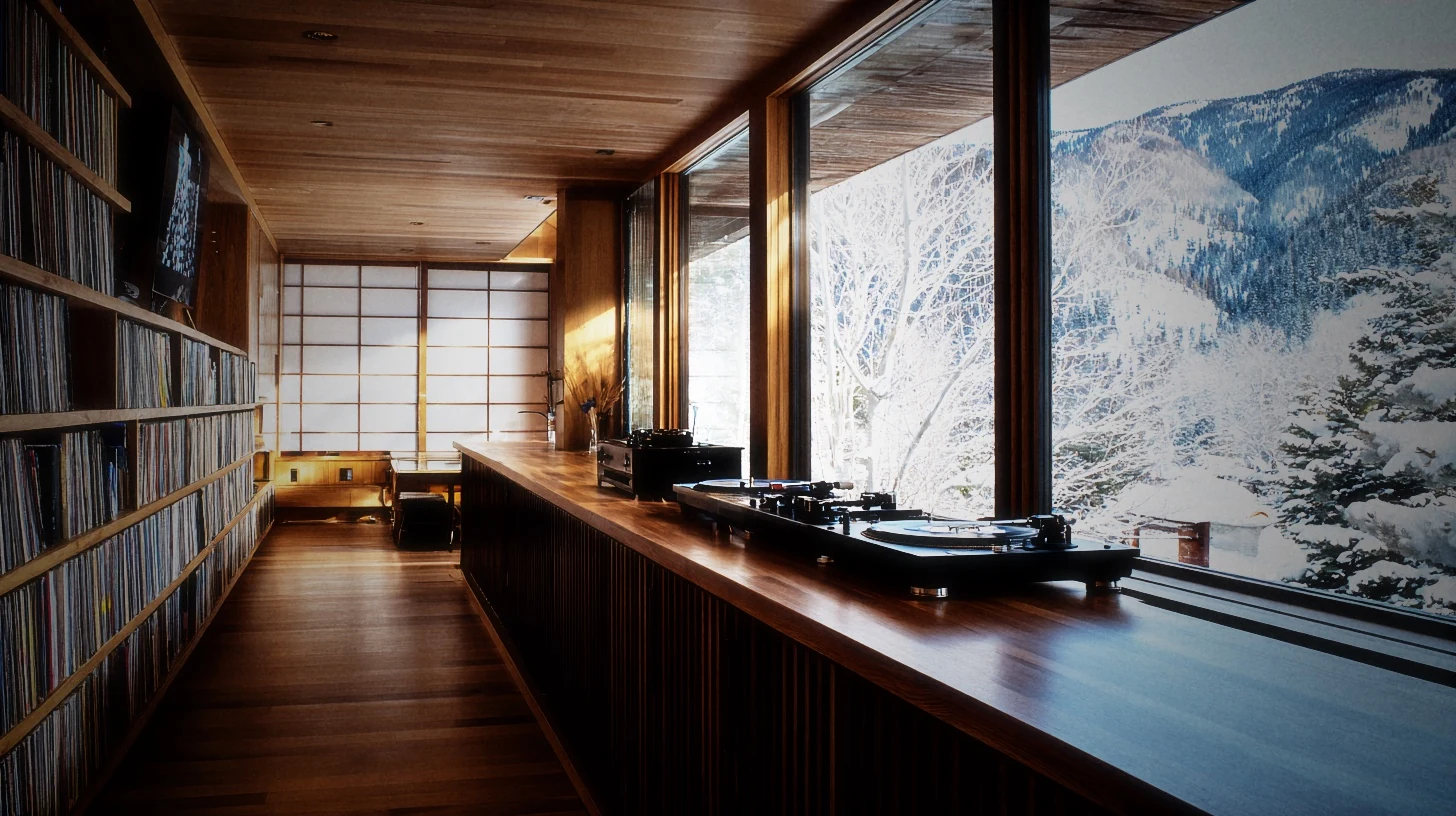
Study image
2 · The first bottling
The regulars send word ahead from their phones twice: for their usual, so the bar is kept for tasting, and for the first bottling of a version that wins, so the run is sized before it is made. Their names go on its first label.
Swipe sideways for the whole drawing
Fig. 1. From a numbered version to the first bottling: the till counts the second rounds, the regulars order the winner’s first run from their phones, the run is made to their orders, and their names go on the label. Drawn by us, as an example, not a result.
Steps
- 1A version. A house drink, numbered on the menu and the cup.
- 2Counted. Second rounds of each version, for regulars who signed up.
- 3The winner. The version most come back for, past a mark set in advance.
- 4Ordered. One text, and the regulars order the first bottling from their phones.
- 5Sized. Made to their orders in a licensed kitchen, kept cold and sold within days.
- 6Named. Their names on the first label, as each of them chooses.
Marks
- An order, from a regular’s phone.
- Back to the bench, for the next version.
3 · The room
A shelf by the door for the usuals ordered ahead, a window seat at the front, the bar down the middle with the bench behind it, a listening room at the back, and a shelf of books, ceramics, records and the bottles. We’d build it new in teak, mahogany and washi, after the listening bars of 1970s Japan.
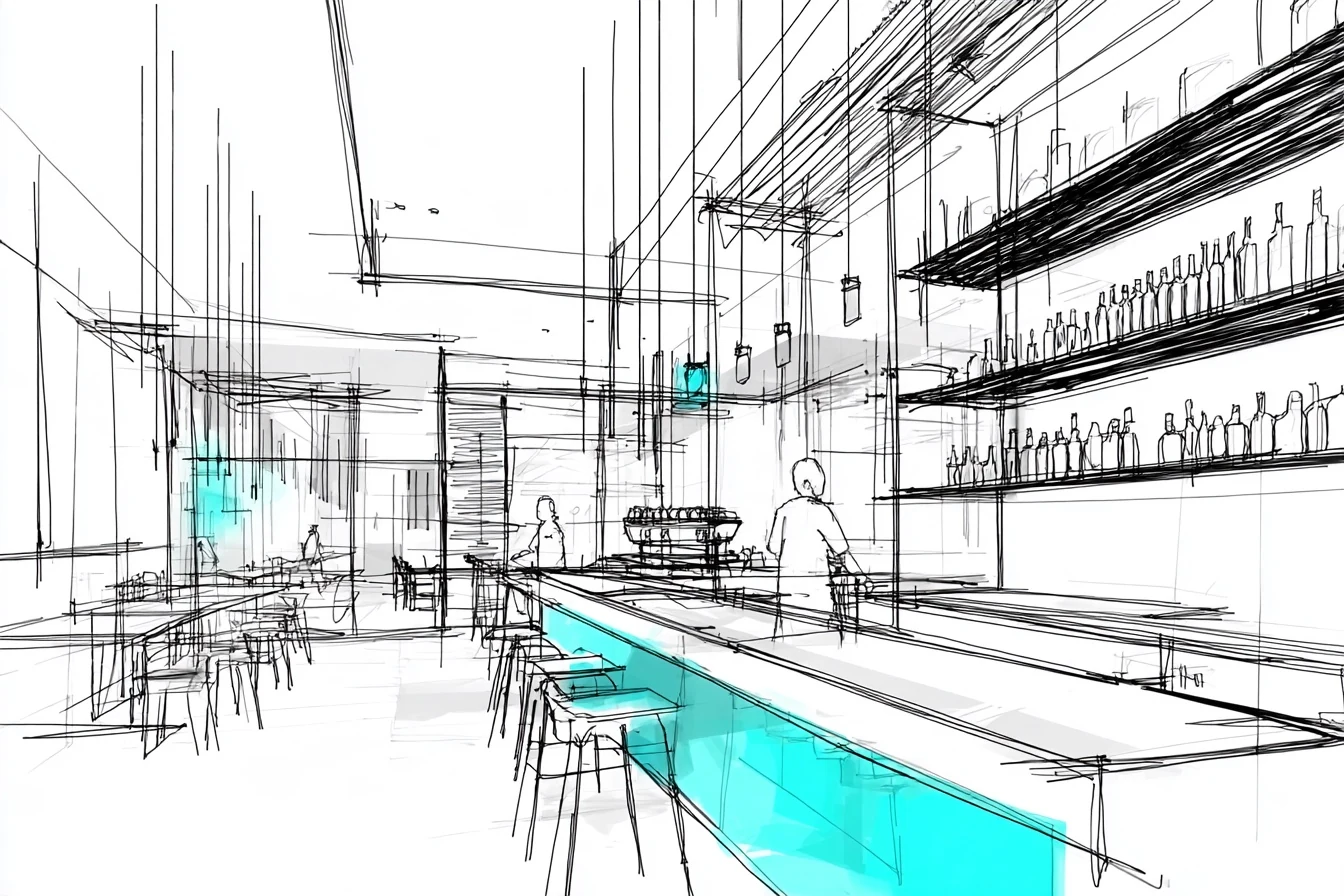
Swipe sideways for the whole drawing
Fig. 2. The café, in plan: a shelf by the door for the usuals ordered ahead, a window seat at the front, the bar down the middle with the development bench behind it, and a listening room at the back.
Places
- AThe street.
- BThe shelf by the door: the usuals ordered ahead wait here.
- CThe window seat.
- DThe bar: nine seats, kept for tasting.
- EThe development bench: scales and the week’s versions.
- FThe shelf: books, ceramics, records, the bottles.
- GThe store room.
- HThe listening room, and its chairs.
- IRecords.
- JThe WC.
Lines
- Walls, cut
The café, in figures
- Size
- 25 by 60 ft
- The bar
- Nine seats
- By the door
- The usuals, ordered ahead
- By day
- Coffee, from seven
- By night
- Alcohol-free drinks, the same bench, from five
- All day
- Records in the back room; the shelf sells books, ceramics, records and the bottles
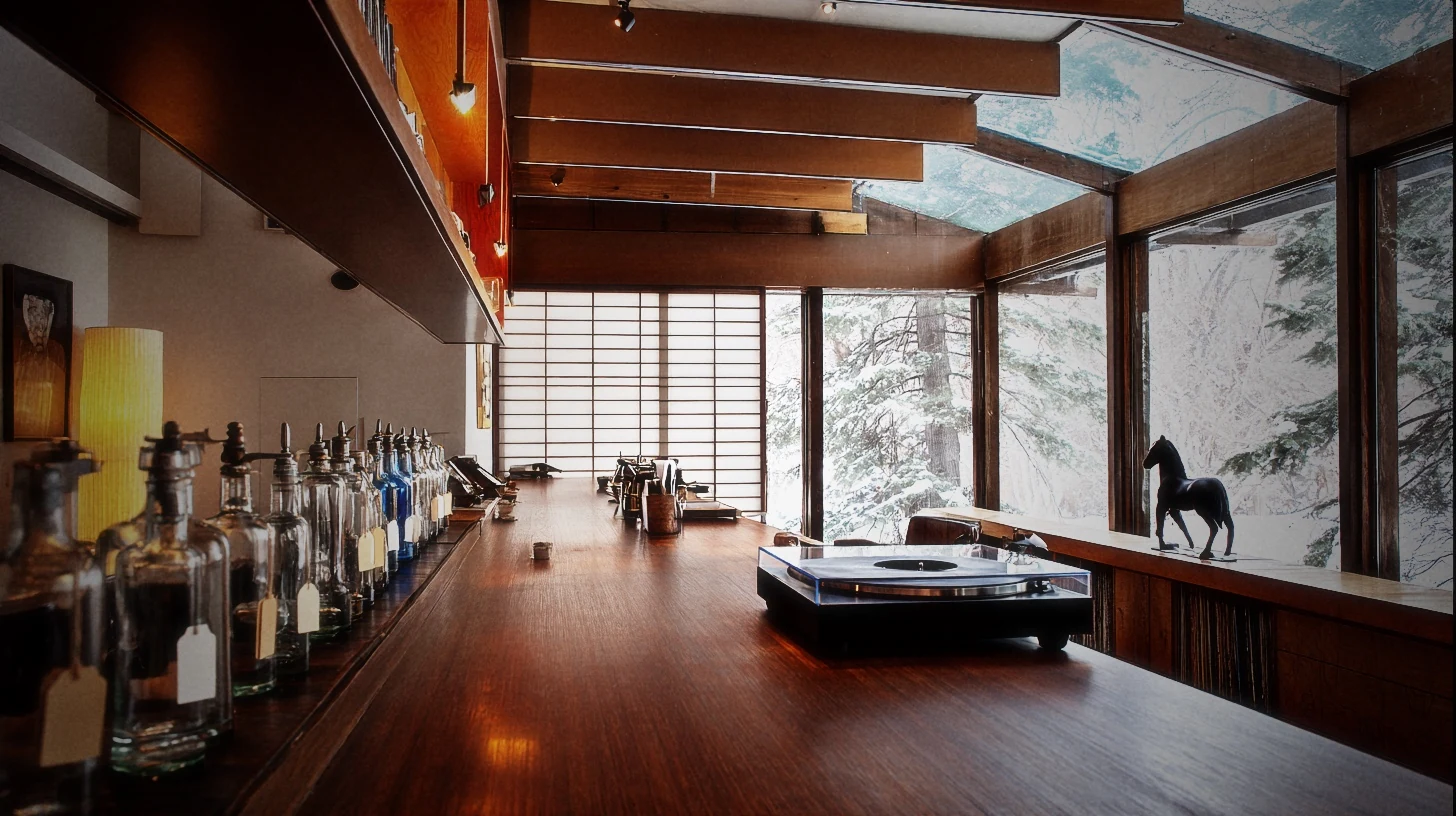
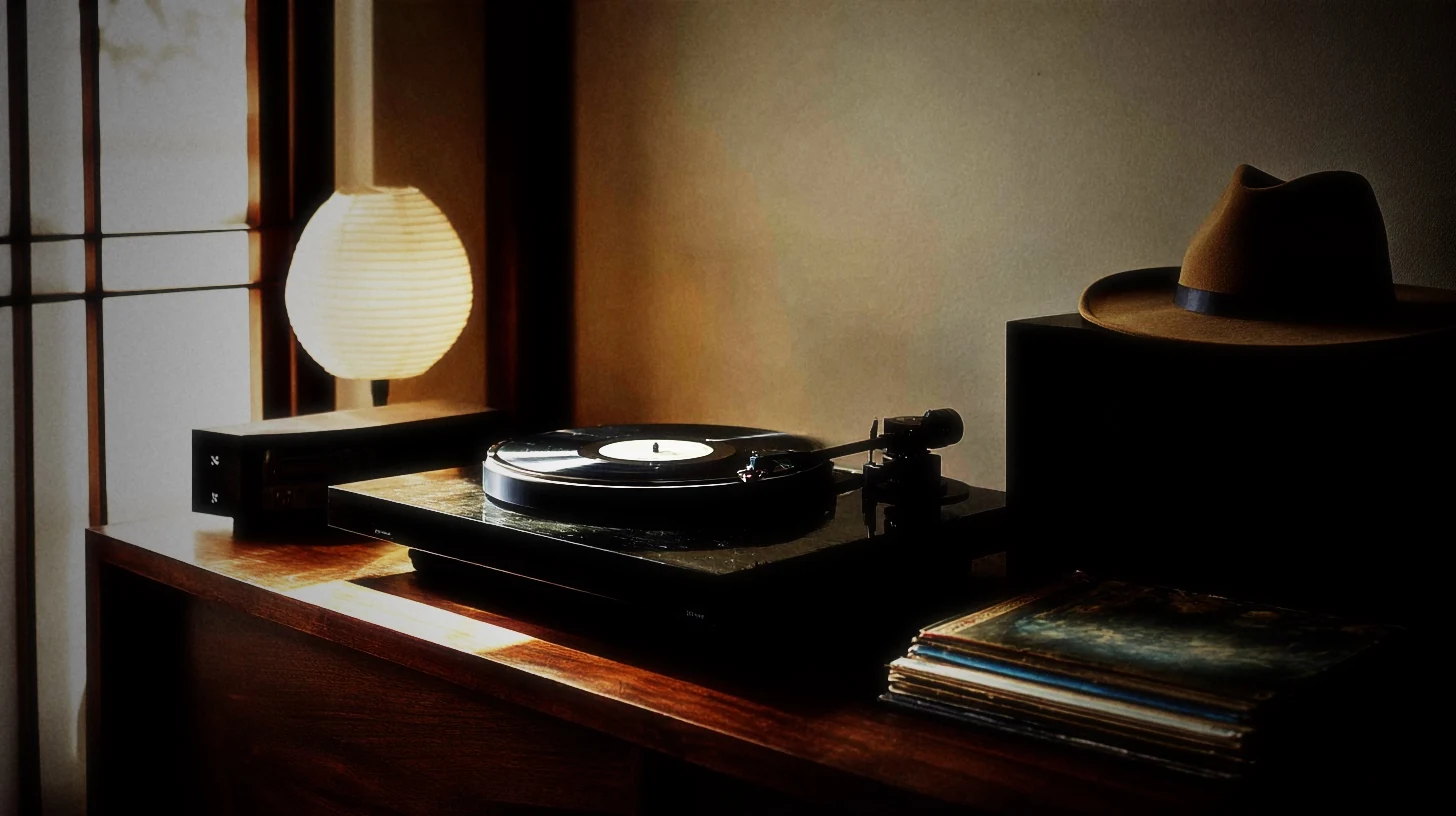
Study images
4 · One week at the bench
Each week the bench would make new versions in view of the bar, and the staff would pour them with the number on the cup. The till would count who comes back, and every sixth week the head barista would keep, change or drop each version.
Steps
- 1Ahead. The usual is ordered from the phone, and waits on the shelf by the door.
- 2Brew. Monday: the bench makes the week’s versions, in view of the bar.
- 3Pour. Each version goes out with its number on the cup.
- 4Count. The barista rings each version on its own key, and the till counts who comes back for a second round.
- 5Read. Sunday: the head barista reads the second rounds for each version.
- 6Adjust. Every sixth week, each version is kept, changed or dropped. A winner goes to the regulars for its first bottling.
Fig. 3. One week at the bench: ordered ahead, brew, pour, count, read, adjust.
5 · The menu, over six months
Six invented drinks. Each circle would be a new version, on the menu until the next one. In this example, two are dropped, two are still being worked on, and two win, so their regulars order the first bottling.
Swipe sideways for the whole drawing
Fig. 4. The menu, over six months: each circle a new version that stays on the menu until the next one. A bottle marks a winner, bottled for the regulars who ordered it. Drawn by us, as an example, not a result.
Lines
- Heavy line: a winner, its first run ordered by the regulars.
- Thin line: still on the menu.
- Grey line: dropped.
- 0.1Versions below 1.0 are still in development.
6 · Why it should work
A drink usually reaches a shelf before anyone knows who will buy it twice. A café already sees who comes back. Its till can count the second rounds of each version, and its regulars can order a first run before it is made. That works where people come back on their own, in what Ray Oldenburg called a third place.
“…the regular, voluntary, informal, and happily anticipated gatherings of individuals beyond the realms of home and work.”
Ray Oldenburg, The Great Good Place, 1989
Swipe sideways for the whole drawing
- PrecedentIn the barrel, and the taproomBordeaux has sold wine in the barrel for centuries. Today buyers order it early and take their bottles once it has matured. Some brewers put the beers their own bars sell best into cans.
- HistoryThe subscribers, 1715Alexander Pope found the readers for his Iliad before it was printed. The first volume opens with the list of its subscribers.
- The mindWhat a first sip missesOver two dozen tastings, liking for complex drinks rose while liking for sweeter ones stayed flat (Sulmont-Rossé and others, 2008). People prefer firms whose products users helped design (Dahl and others, 2015).
- MetaphorStates, and the proofA printmaker pulls state after state until one proof is signed “good to print”. Every print in the edition is matched to it, and numbered.
The idea
The regulars order the first bottling before it is made.
Every house drink is a numbered version. The till counts who comes back for each, and the winner’s first run carries the regulars’ names.
Fig. 5. Where the idea comes from: wine bought in the barrel, a book that opened with its subscribers’ names, what a first sip misses, and a printmaker’s proof. All four are about knowing who wants a thing before it is made in quantity.
| What the research shows | What it means | Our principle | The rule | In SECOND ROUND |
|---|---|---|---|---|
| Across five European markets, only 17 per cent of new packaged-goods launches combine strong trial with repeat buying (NIQ, 2026). | Few launches win both a first try and a second. | Find the repeat buyers before the bottle. | Every house drink is a numbered version, with its own key on the till. | Version numbers on the menu and the cup, and a key for each. |
| Over 24 tastings of four unusual fruit drinks, liking rose for the more complex ones and stayed flat for the sweeter ones (Sulmont-Rossé and others, 2008). | A first sip can pick the wrong drinks. | Count who comes back, not who likes the first sip. | No version wins before its sixth week. | The second rounds, read at the till every Sunday. |
| A distributor won’t take a drink on without a consumer pool (John Fieldly, CEO of Celsius, in Fortune, 2024). | The regulars can be that pool before the first bottle. | Make the first run to order. | The regulars’ orders set the size of the first run. | One text, a link, and a run made to the orders. |
| Customers who watched staff at work saw more effort, and valued the service more (Buell, Kim and Tsay, 2017). | People value what they see being made. | Keep the bar for making, in view. | The usual is ordered ahead, so the bar pours the new versions. | The shelf by the door, and the bench behind the bar. |
| People who took no part still prefer to buy from firms whose products users helped design, because they identify with those users (Dahl, Fuchs and Schreier, 2015). | A bottle the regulars chose can sell to people who weren’t there. | Say who chose it. | The first run names the regulars who ordered it. | Their names on the first label, as each of them chooses. |
| Regulars form in third places, where people gather regularly and informally, beyond home and work (Oldenburg, 1989). | People come back to somewhere they like to be. | Run it as a café first. | Open from morning to night, with somewhere to stay. | Coffee by day, alcohol‑free drinks at night, a listening room at the back. |
7 · How we’d prove it
Nothing here has been built or measured. If a brand wanted it, we’d find out if it works in three weeks, on real people, before anyone builds. The bottling would follow once the orders are in: a small chilled run from a licensed kitchen, with a safety plan for that drink.
- Week one: numbered versions
- We’d put a number beside every house drink on the menu and the cup, and give each version its own key on the till, and ask regulars to sign up, and agree to a text, so the till can tell a second round from a first try. You can run this one yourself tomorrow.
- Week two: the usual, ordered ahead
- We’d let the regulars order their usual from the phone, set a shelf by the door for it, and keep the bar for tasting two versions of one drink.
- Week three: the first orders
- We’d send the regulars who came back most one text, with a link to order the first bottling of the leading version. The bottling itself would wait for the version’s sixth week. Before we start, we’d agree with you how many orders make a first run worth making. Then we’d tell you if it is.
Want it for your brand? We’d start with the same three weeks, at your bar, with your regulars. Like the Roadmap, it ends in a decision.
Contact