MISE.006 · A PORTFOLIO · UNBUILT
The Homes
a brand planned like the homes of the people it serves.
The problem
Revenue and profit are different things. A prime city flagship can sell seven times more per foot than a good mall store and earn about the same once the rent is paid, yet most plans still treat one store as the brand and the rest as copies.
- What it is
- Our proposal for a brand that plans its stores the way its customers live: a townhouse in Paris, a pied-à-terre in New York, a country house in the Cotswolds, a winter house in Tangier and a ski condo in Gstaad. Each home gets its job before it gets its spend, and each is judged on what it does for the brand, not on its rent.
- Why a brand would want it
- Most brands still build one big city store and a lighter copy everywhere else. Their customers no longer live that way. They work from home part of the week, keep more than one home, and expect the same bar in every room. A plan built on one best way leaves most of the stores underfed, with less for the brand than anyone thinks.
- Where it stands
- Unbuilt. Our own idea, with no client. Nothing here has been built or measured yet. It is how we’d plan a fleet with you.
MISE 店 is our design research: unbuilt proposals for stores, made the way we’d make one for you.
1 · The homes we’d plan
One customer, a few homes. A brand may have a few of each, and they look nothing alike, yet every one is still the brand.
Swipe sideways for the whole drawing
Fig. 1. Five homes of one owner, each true to its land: a ski condo in Gstaad, a pied-à-terre in New York, a townhouse in Paris, a country house in the Cotswolds and a winter house in Tangier. The same bench, vessel, blanket and books sit in every room. The dotted line is the customer moving between them: seen in one, bought in another, picked up in a third.
| Home | Its job | How people use it | What changes there |
|---|---|---|---|
| The townhouse | The city store, where the brand is seen at full volume by visitors and by locals passing through. | A few visits a year, often with guests. | The big moves: the room, the stair, the window people photograph. |
| The pied-à-terre | A small room in the city, close to where people work and stay. | On the way home, often, and at short notice. | A short edit, a fitting, a pickup. |
| The country house | The store near home. The same people, week after week. | Most weeks, on the way to something else. | The front table, the windows, what the room is for this month. |
| The winter house | A store for the season, where people are when they have time. | Every day for a few weeks, then not at all. | It opens and closes with the season, on a frame that packs away. |
| The ski condo | A few rooms far from the city, chosen for that place. | Now and then, on purpose. | A short edit, a place to try on, a place to pick up. |
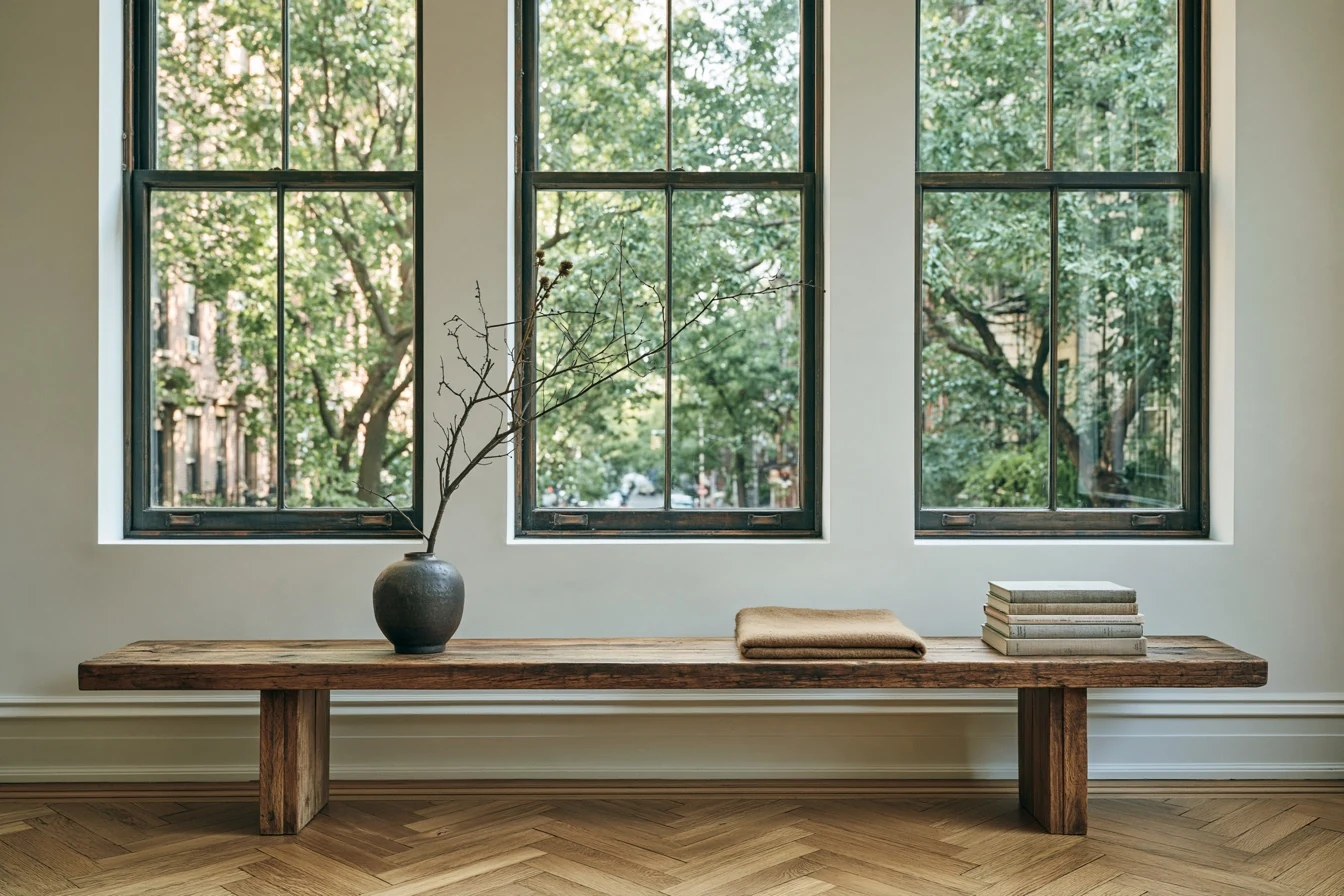
The townhouse · Study image
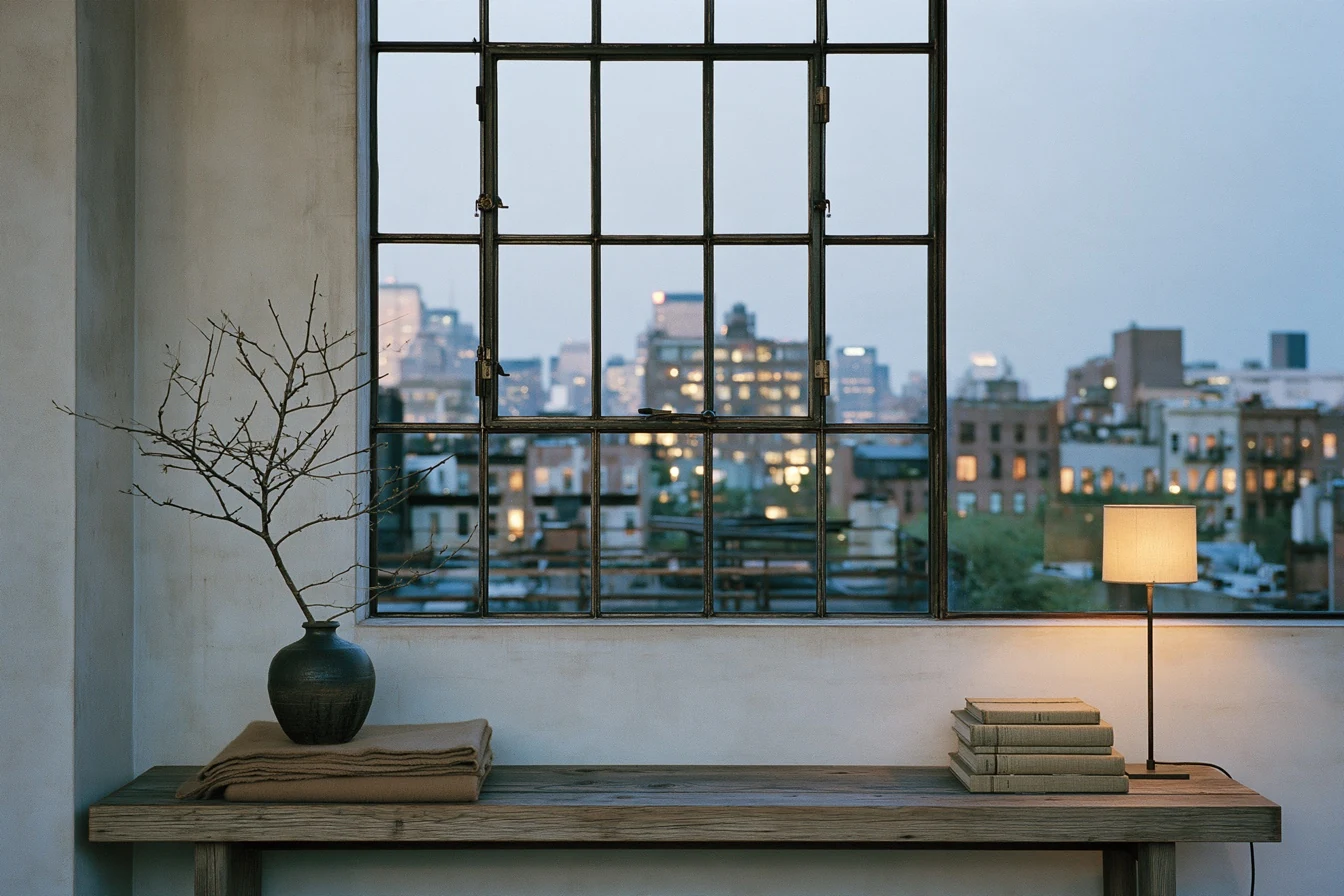
The pied-à-terre · Study image
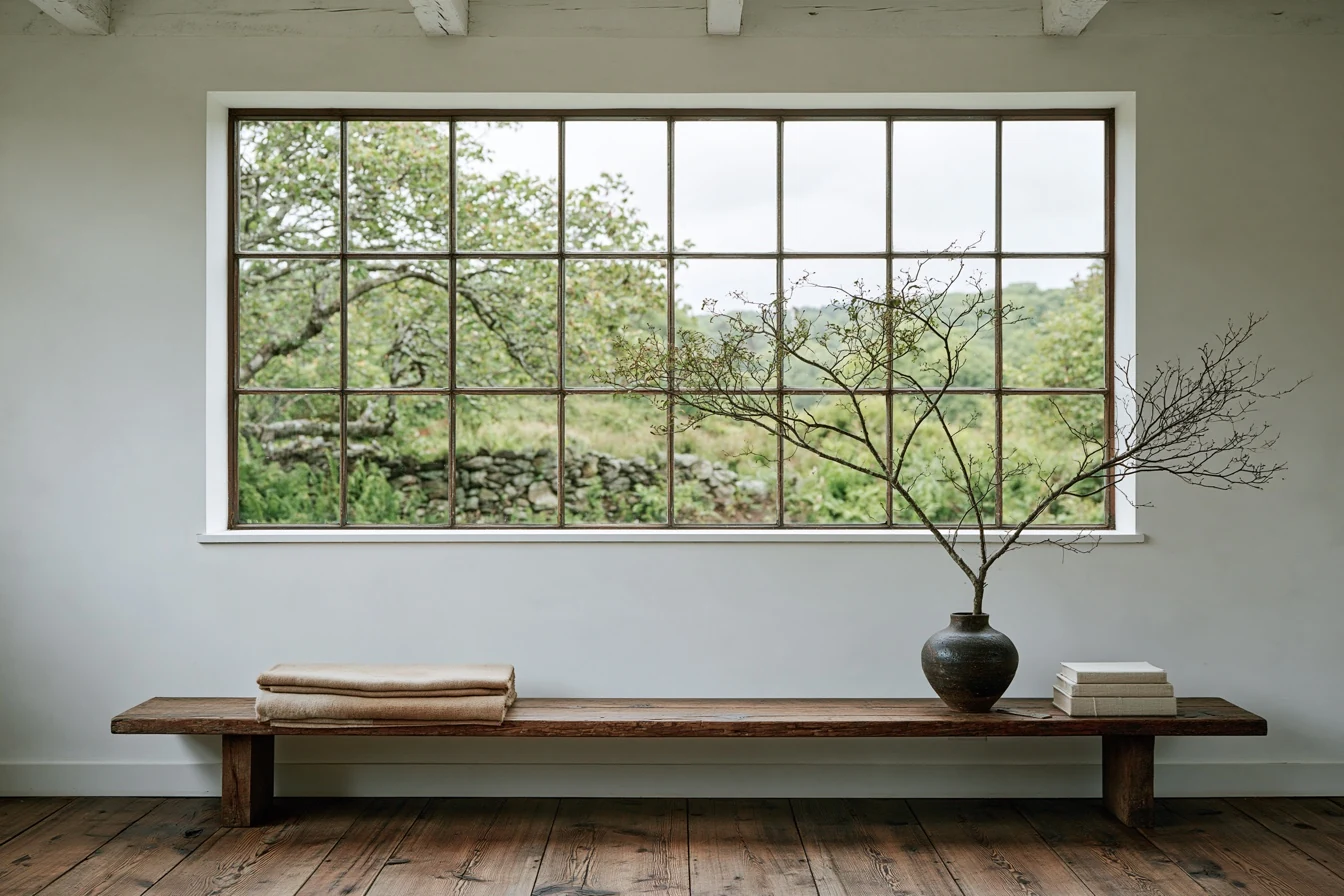
The country house · Study image
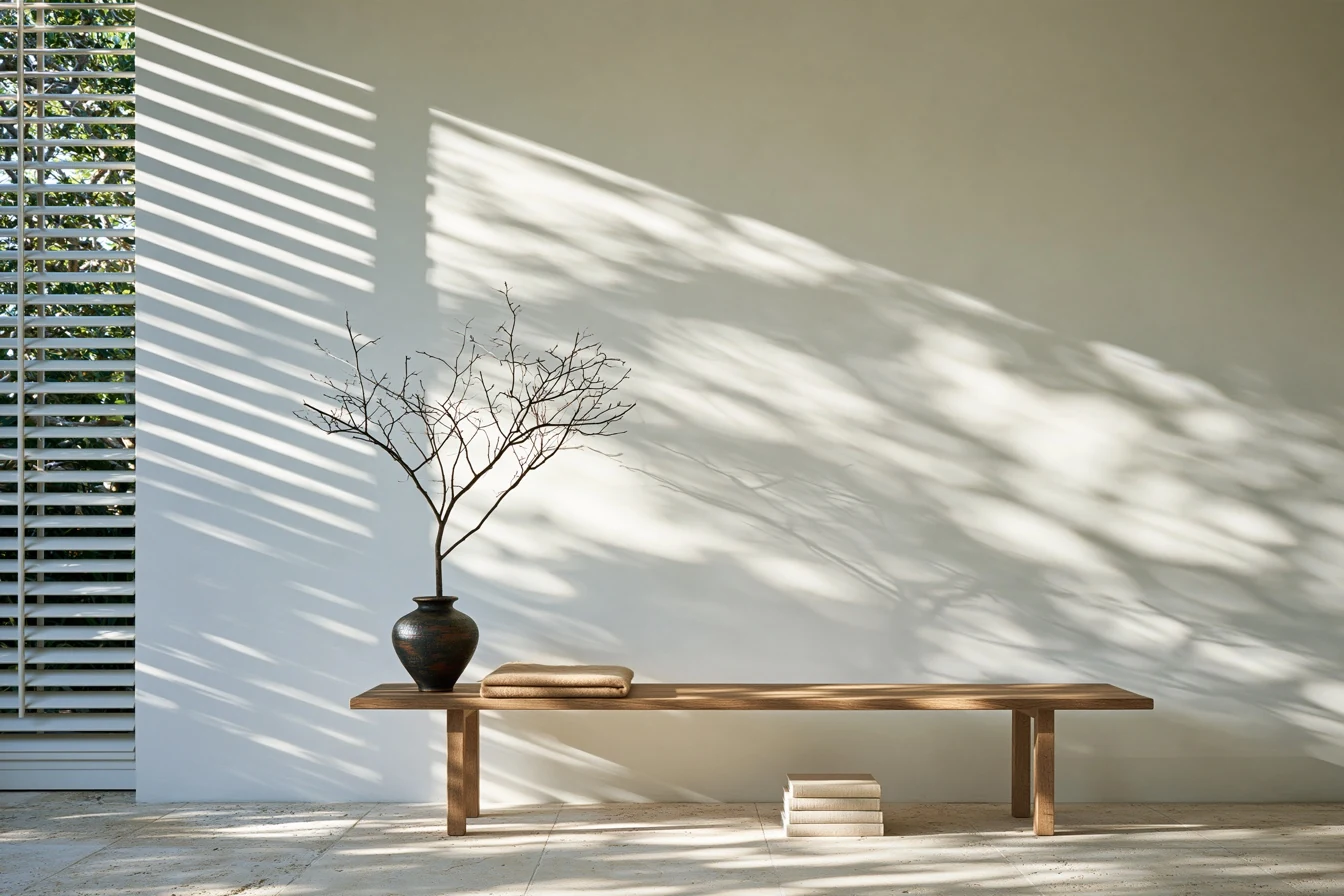
The winter house · Study image
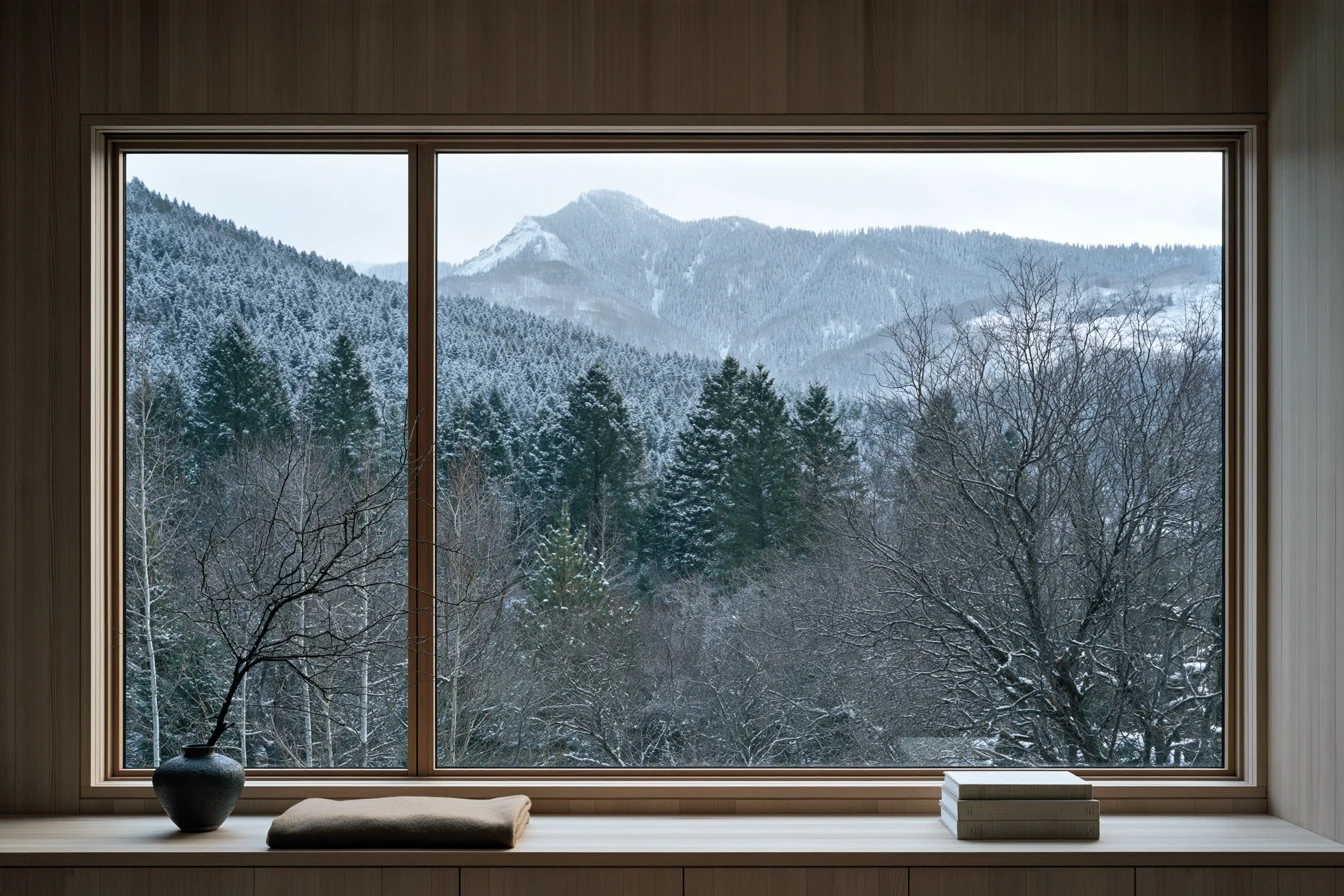
The ski condo · Study image
The same bench, vessel, blanket and books in every room. Each home shows another side of the same owner.
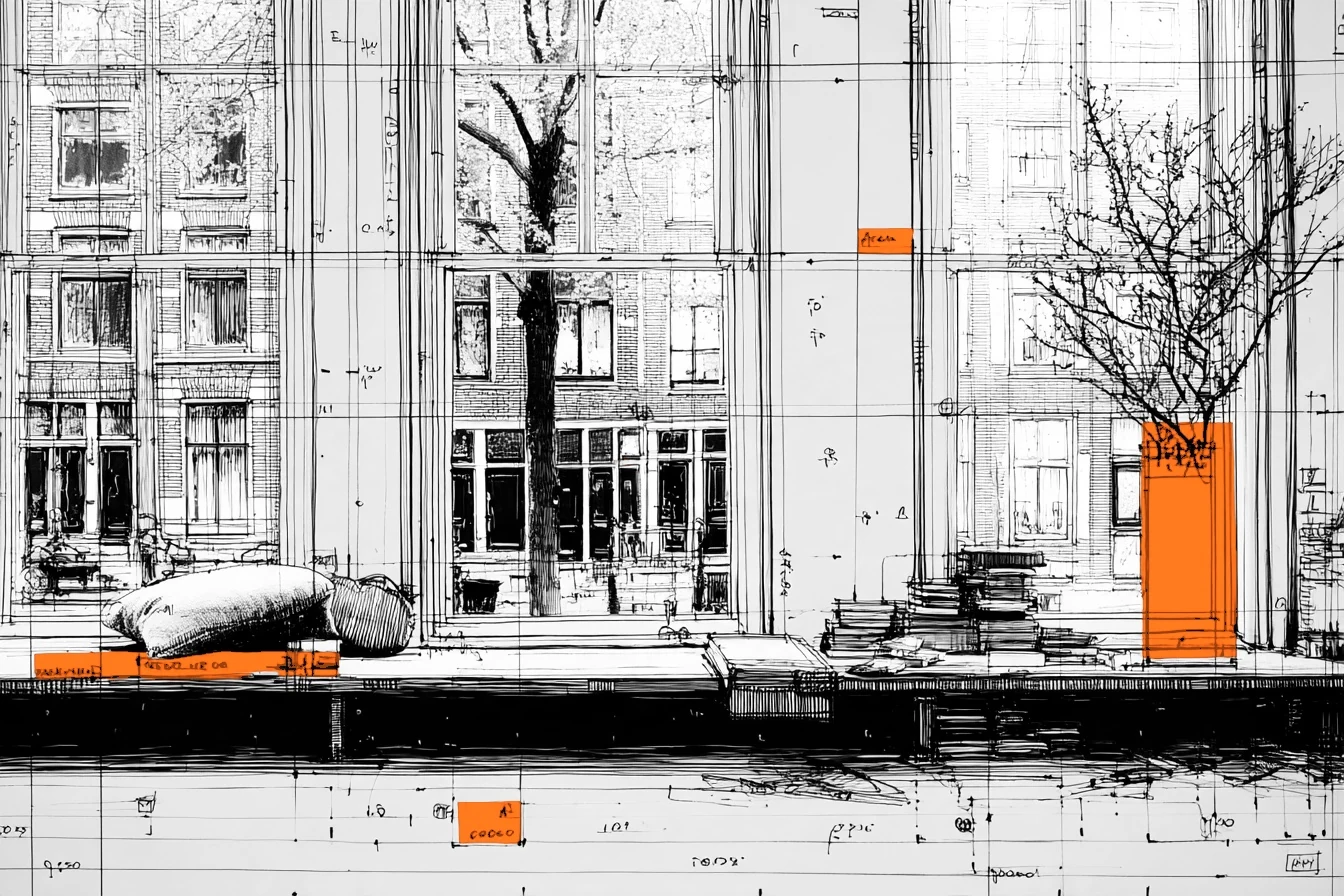
The townhouse · First sketch
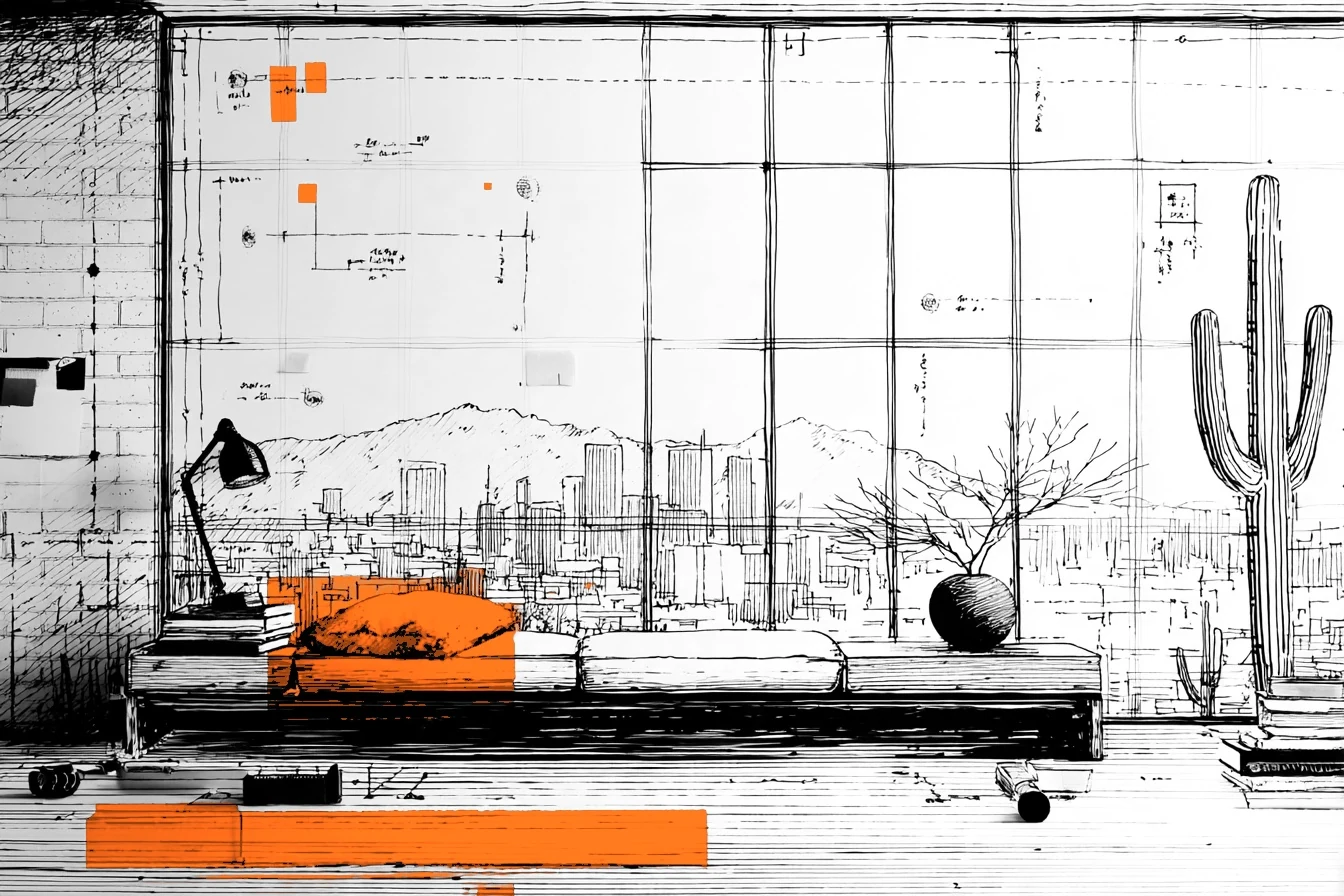
The pied-à-terre · First sketch
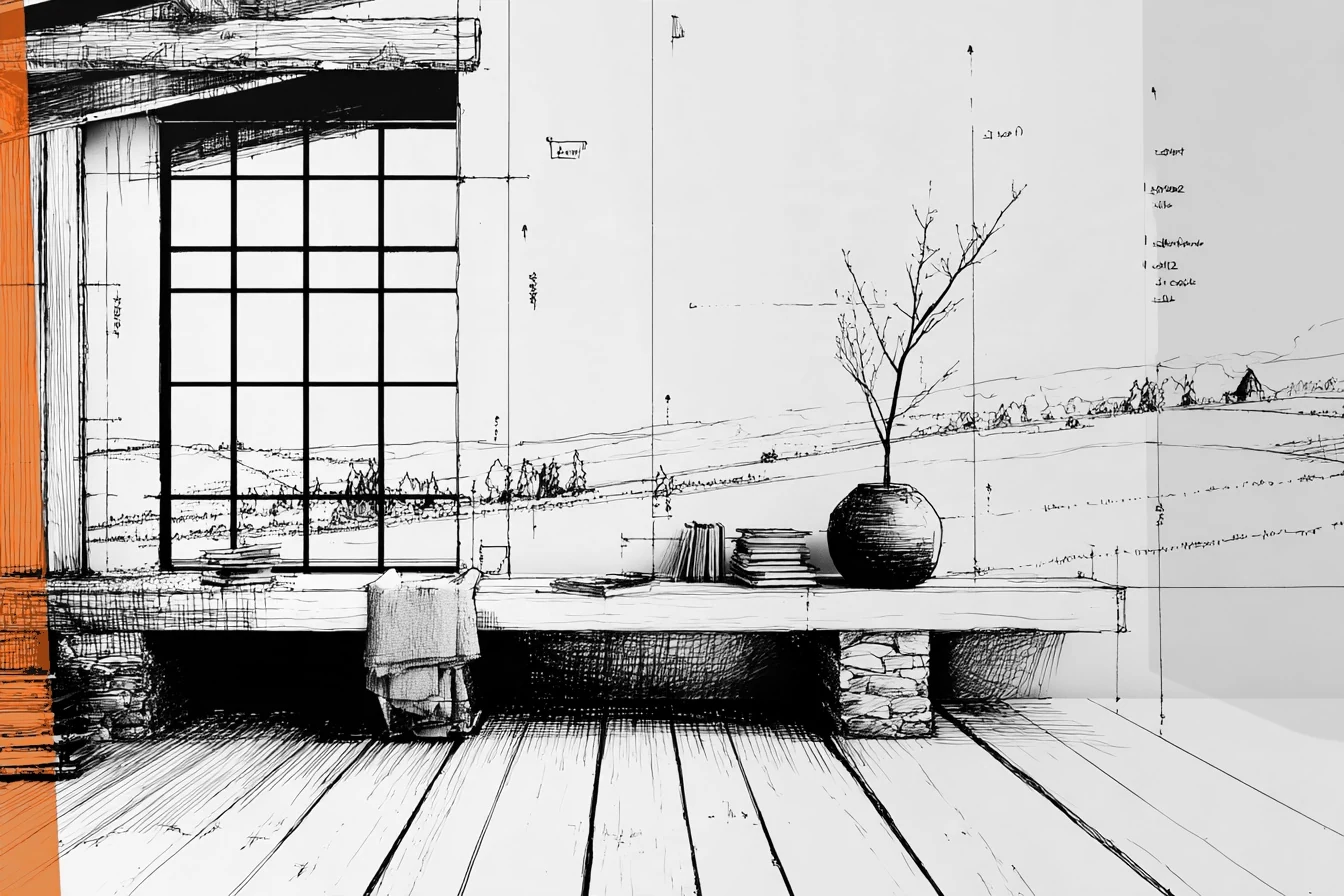
The country house · First sketch
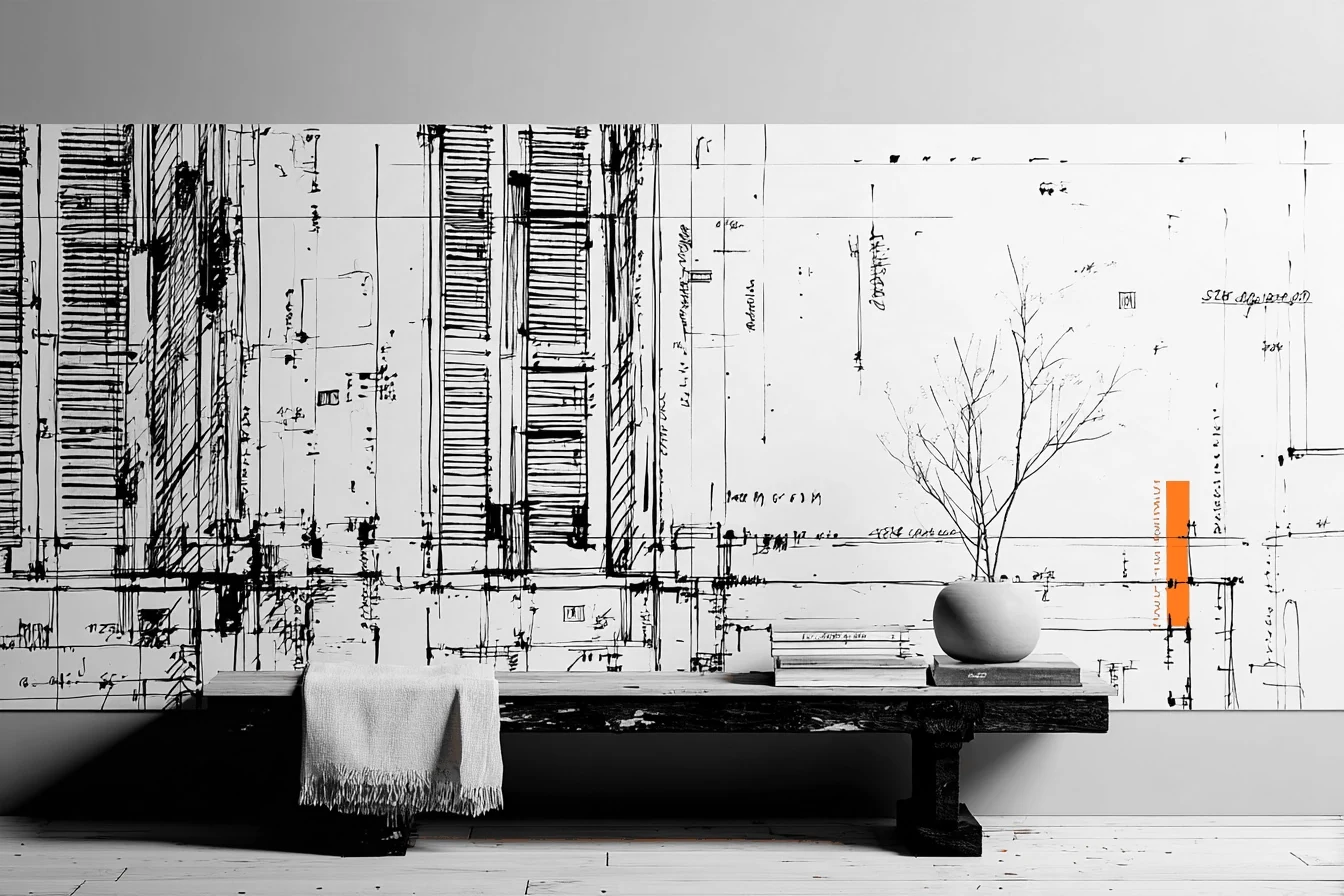
The winter house · First sketch
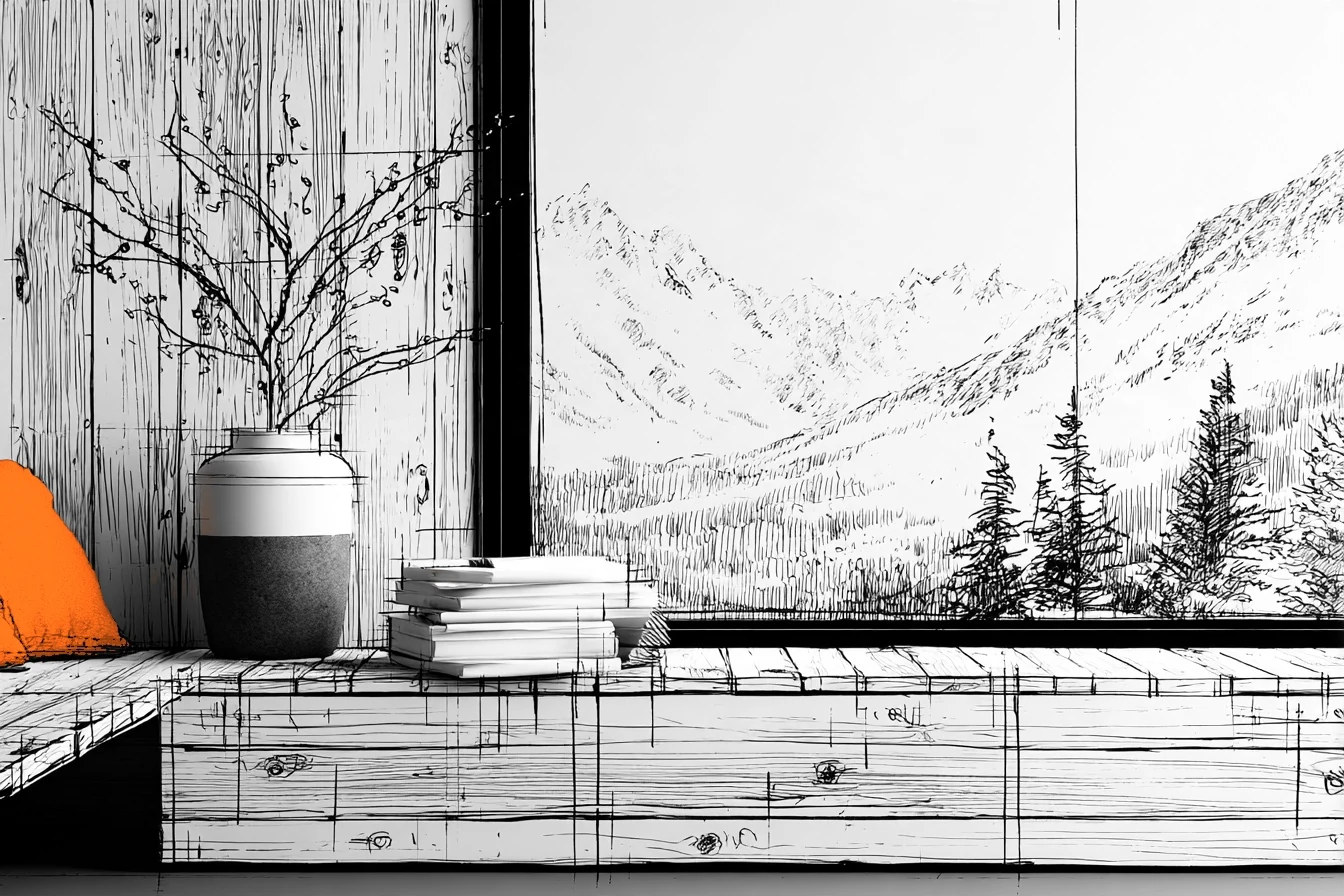
The ski condo · First sketch
First sketches: the same bench drawn into each home, marked in the one colour of this study.
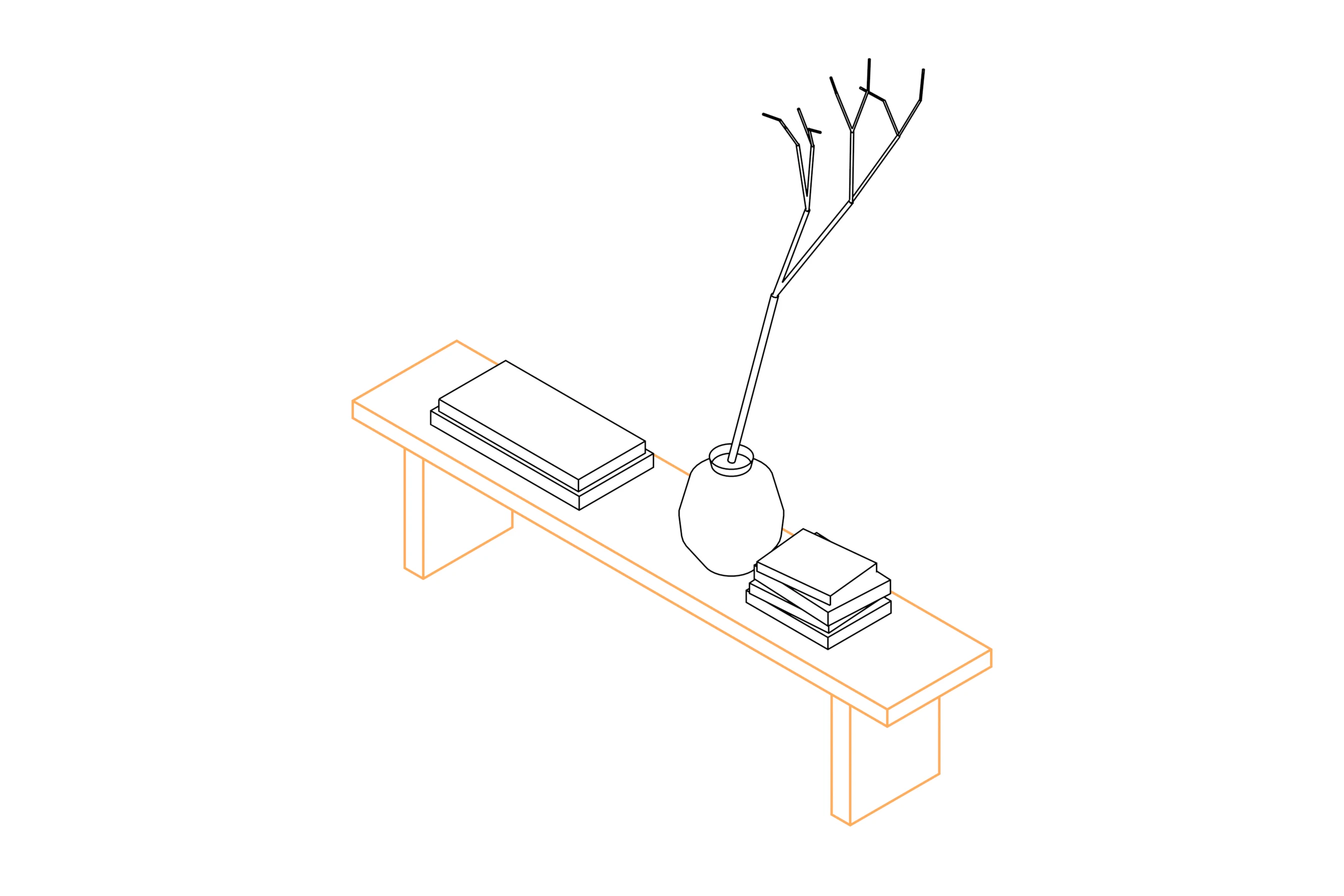
Fig. 2. What travels: the same bench, vessel, blanket and books, made once and placed in every home. The bench, in this study’s colour, is the one piece every home shares.
Swipe sideways for the whole drawing
Fig. 3. What stays and what changes. The owner’s things stay; the room, the light, the view and the size are each home’s own.
2 · What’s left for the brand
Every store has a pre-aesthetic number: the box, the systems, the design work, security, a place to pay. It is spent before anyone makes a single brand decision, and it doesn’t shrink when the deal does. So when the numbers get tight, the cut comes out of the other half, the part that makes the store yours.
Swipe sideways for the whole drawing
Fig. 4. An illustration, not data. If the pre-aesthetic number is half the build, a 15% cut takes 30% of what’s left for the brand. In a cold, dark shell the number is bigger and what’s left is smaller still.
- The townhouse
- Spends what’s left on the moves people come to see.
- The pied-à-terre
- Spends it on a short edit and a fitting, close to where people work.
- The country house
- Spends it on what can change every month: tables, windows, the light.
- The winter house
- Spends it on a frame that packs away and comes back next season.
- The ski condo
- Spends almost nothing on the box and nearly all of it on the edit.
3 · How each home is judged
Revenue and profit are different things, and the homes do different things for the brand. Each one is read three ways.
- Inside its walls
- What it earns after rent and running costs. A busy city store can sell many times more per foot than a store near home and still earn about the same per foot.
- Around it
- What it does for the brand nearby: online sales in its area, people who first came through its door, pickups and returns.
- Across the homes
- Whether the same people turn up in the other homes. The quiet home can be the one holding the others up.
4 · Six moves
What we’d do first, with your team.
- 1Give every home a job before it gets its spend.
- 2Give the room an equal seat with the deal and the forecast.
- 3Plan by kind of place, not by prototype.
- 4Spend where the customer feels it.
- 5Build a frame that can change.
- 6Know the pre-aesthetic number before you sign.
5 · Why it should work
People shop where they are, more of the week, and the money has spread to new places. The homes follow them.
| What the research shows | What it means | Our principle | The rule | In THE HOMES |
|---|---|---|---|---|
| Work from home went from 7 in 100 paid workdays in 2019 to about 27 in 100 in October 2026 (WFH Research, November 2026). | Part of the week is spent near home. | Build where people are. | The country house gets the brand’s best thinking. | The country house. |
| In the four latest years of IRS migration data, through 2022, Manhattan lost a net 38 billion dollars in income to people moving away; Palm Beach County gained 19 billion (IRS Statistics of Income). | The money has moved to new places. | Follow the customer, not the old map. | Every home is placed for how people live now. | The winter house and the ski condo. |
| Close a store, and online sales in the area around it fall 11.5% (ICSC, The Halo Effect III, 2023). | A store’s effect reaches past its walls. | Count the home by everything it causes. | No home is judged on its own walls. | The three readings. |
6 · How we’d prove it
Nothing here has been built or measured. If a brand wanted it, we’d start with the stores it already has, in three weeks.
- Week one: the read
- We’d walk your stores with your team and read each one three ways: inside its walls, around it, and across the fleet.
- Week two: the jobs
- Every store gets a kind of home and a job, and its pre-aesthetic number is worked out before anything is drawn.
- Week three: the plan
- Which home to build next, where, and where what’s left for the brand goes in each one. Before we start, we’d agree with you what it has to show to be worth rolling out.
Want it for your stores? We’d start with the same three weeks, with two of your homes. Like the Roadmap, it ends in a decision.
Contact